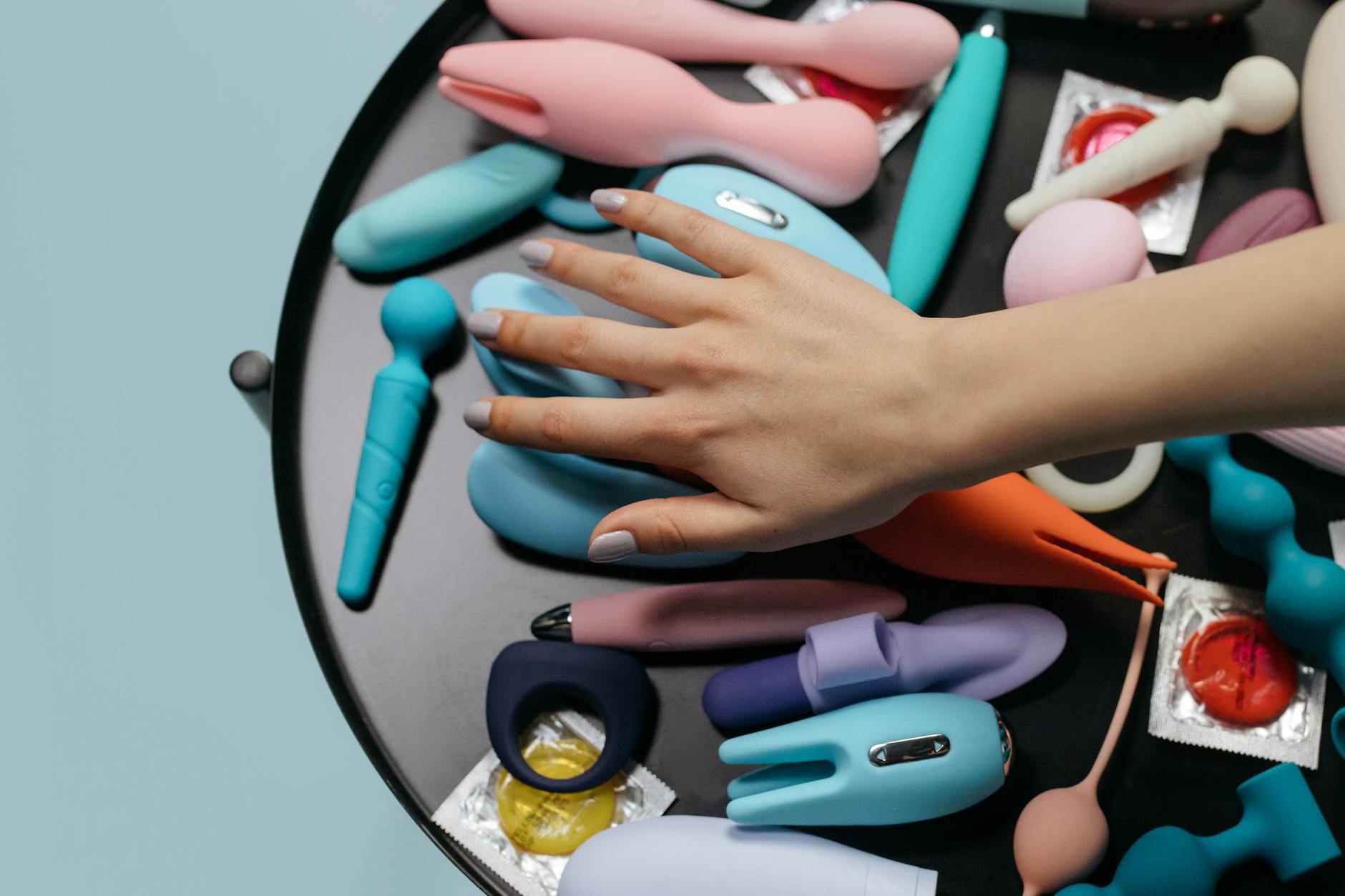
Here's the thing about bringing up toys
Most people think the hard part is saying the words. It's not. The hard part is managing the story you're already telling yourself about what your partner will think. You're worried they'll feel replaced, insulted, or suddenly like you've got some secret sexual life they didn't know about. And that worry is so loud that you never actually find out what they're actually thinking.
I've worked with hundreds of couples on this exact conversation. The ones who do it well aren't braver or more direct. They're just willing to be honest about what they actually want, without apologizing for it.
Why partners actually resist (and it's not what you think)
When someone says no to a lemon vibrator or any sex toy, it's rarely because they think toys are wrong. It's usually one of three things.
First, they think you're unsatisfied with them. Your partner has an unconscious narrative that says: if my partner wants a vibrator, I'm not enough. That's not logical, but it's human. The clitoral vibrator isn't competing with them in reality, but in their mind, it might be.
Second, they feel left out of the decision. You didn't ask them. You told them. Or worse, you're asking permission like they get to veto your own pleasure. That dynamic gets messy fast.
Third, they don't actually understand what a lemon clitoral vibrator does. They think you want it for partnered sex instead of them, when really you want it during partnered sex, with them, as part of what you both experience together. Those are wildly different things.
Framing matters enormously here.
The setup conversation (timing is real)
Don't bring this up during sex, right after sex, or during an argument. And definitely not via text after midnight when you've had two glasses of wine.
Bring it up when you're both relaxed, clothed, and neither of you has anywhere to be in the next thirty minutes. A weeknight after dinner works. Sunday morning coffee works. A car ride where you're not making eye contact the whole time works surprisingly well.
Start with the actual truth about why you want it. "I've been thinking about trying something new because I want to explore what feels good for me," is so much more powerful than "I read that vibrators are supposed to be amazing." One is about your body and your pleasure. The other sounds like you're following a trend.
The actual words that work
Honestly though, the exact phrasing matters less than the energy behind it. But here's what I recommend as a starting point:
"I want to talk about something that's been on my mind. I've been curious about trying a lemon vibrator. Not instead of you, but in addition to what we're already doing. I think it could feel really good for me, and I'm wondering if you'd be open to exploring that together."
Notice what that does:
It's direct, not apologetic. You're not asking permission. You're sharing information and inviting them to participate.
It addresses the replacement fear head-on by saying "not instead of you." You're being specific about the fact that this is an addition, not a substitution.
It frames the vibrator as something for your body, your pleasure. It's not a commentary on their performance.
It asks them to explore it "together," which means you're not sneaking around with toys. You're doing this as a team.
What to say if they push back
If your partner says something like "I'm not sure I'm comfortable with that," the move is to get curious instead of defensive.
"What's coming up for you?" is a much better response than explaining why they should be comfortable. You want to understand their actual concern, not argue them into agreement.
Listen. Really listen. Don't interrupt. Don't prep your counterargument while they're talking.
If it's a replacement fear, you can say: "The reason I want this is actually because I want to know more about my own body. That's something I do for me. It doesn't change anything about what we have."
If it's an exclusion fear, you can say: "I want you there. I want us to figure this out together. I'm not hiding anything from you."
If it's confusion about what a lemon vibrator actually does, show them. Pull up a product page. Watch a demo video together. Demystify it. A lot of pushback dissolves when someone realizes a clitoral vibrator isn't some wild insertion device. It's a suction vibrator that stimulates the clitoris externally, in a way that feels different from hands or mouths.
Reframing pleasure as connection (not competition)
This is the big one. In my practice, I notice that couples who successfully introduce toys are the ones who frame them as a form of intimacy, not as a workaround.
So when you're introducing the idea, you're not saying "I need this because you can't get me there." You're saying "I want to feel more pleasure, and I want you to be part of that."
There's a real difference. One is a criticism. The other is an invitation.
When you actually use the lemon vibrator together, you're not hidden under the covers doing your own thing. You're in the same bed, touching, kissing, looking at each other. Your partner might be using their hands or mouth on you while you use the vibrator. You might be using it during penetrative sex. You might be using it and having them watch. The exact configuration varies, but the point is consistent: this is something you're sharing, not something you're doing alone.
That reframe changes everything. Suddenly it's not a replacement. It's an expansion.
Managing your own anxiety (so it doesn't leak into the conversation)
Before you have this conversation, sit with your own stuff.
Why do you want a lemon vibrator? Really. Not "because it would feel good," but what's underneath that. Are you wanting to explore your own pleasure more deeply? Are you feeling disconnected from your body? Are you curious about sensation? Are you bored and want to try something new? None of these answers are wrong, but knowing your actual answer helps you talk about it with real confidence.
What are you afraid your partner will think? Write it down. "He'll think I'm not satisfied." "She'll think I'm cheating." "They'll feel replaced." Look at each fear directly. Is it based on what they've actually said before, or is it a story you're making up? Most of it is the latter.
What's your actual bottom line here? Are you asking for permission, or are you inviting them to join you? That distinction matters because it changes your whole energy in the conversation. You can introduce a toy to a partner and still maintain that this is something you're choosing for your own body. You're not asking them to make you orgasm differently. You're asking if they're interested in watching, participating, or being involved in some way.
Get that clarity first. Your partner will feel the difference.
The first time you actually use it together
Don't make it a production. Don't set up candles and rose petals and announce that tonight is the night you're trying the new lemon vibrator. Just... use it when you're already intimate with your partner.
You don't need a conversation before every single use. You've already had the big conversation. Now you're just living it.
If you want to try it during partnered sex, start with foreplay. Use it on yourself while your partner is touching you or inside you. Let them feel what it's doing by touching the area around it. Make it collaborative.
Or use it solo, and then tell your partner afterward how it felt. "That was incredible. I want to do that again." The novelty and your genuine excitement about your own pleasure is often enough to shift your partner's initial hesitation into curiosity.
Some partners will want to use it on you. Some will want to use it while they're inside you. Some will want to watch from the side and then join in later. The point is: let it unfold naturally instead of scripting it.
When your partner says yes but seems nervous
Sometimes partners agree to try it but you can feel their apprehension. They're tense. They're not fully present. That's fixable.
Pause. Literally stop what you're doing and check in. "Hey, I can feel some hesitation. We don't have to do this right now. What's going on?"
Give them room to be nervous. Nervousness isn't a no. It's just new energy that needs space to settle.
You might say: "We can take this really slow. We don't have to use it during sex. Maybe I just use it and you're next to me. No pressure to participate." Lower the stakes. Let them observe first before they're expected to be involved.
A lot of partners come around once they see how much pleasure their partner is actually experiencing. Watching someone you love have intense pleasure is often hotter and less threatening than they anticipated.
FAQ: The questions couples actually ask
What if my partner says no and won't budge?
Then you have a bigger conversation about sexual autonomy in your relationship. A partner saying no to a toy is their right. You saying "but I want one" is also your right. The question becomes: can you both live with that? Can they be okay with you using a lemon vibrator solo, even if they don't want to be involved? Can you be okay with honoring their boundary? That's a negotiation, not a rejection of you.
Should I buy the toy before or after the conversation?
After. Buying it first feels like you went behind their back, even if you didn't mean it that way. Having the conversation first, and then shopping together or each ordering separately, feels collaborative. Plus, your partner might have preferences about size, color, or intensity that matter.
What if I'm embarrassed to show my partner a product page?
You're more embarrassed about it than they will be. I promise. And if you're that uncomfortable looking at it yourself, that's worth exploring. Your own pleasure shouldn't be shameful. That said, you don't have to use words like "suction" or "stimulator." You can say: "There's this vibrator that's shaped like a lemon. It's called the Lem. It works by using gentle suction on the clitoris. People seem to really like it." Facts are easier than feelings.
How do I bring it up if we've been together for 20 years?
The same way. Long-term couples sometimes assume they know everything about their partner's sexuality. You don't. Introducing something new can actually deepen intimacy because you're saying "I want to keep exploring, and I want you to come with me." That's not a sign of a failing relationship. It's a sign of a curious one.
What if my partner wants to use it but I'm nervous now?
Relax. You started the conversation, which means you genuinely want this. Trust that. And remember: you get to stop at any point. "I changed my mind" is always a valid sentence. Consent goes both ways, in the moment and over time.
Is one lemon vibrator conversation enough?
Not necessarily. Sometimes you need to revisit it after you've actually tried it. "That was fun, but I want to try it differently next time." "I liked this part but not that part." That's all normal. Keep talking. Keep checking in. Sex with a partner is an ongoing conversation, not a single event.
The actual point of all this
Introducing a lemon clitoral vibrator to your partner is really about introducing more pleasure into your relationship. It's about saying: I want to feel good, and I want you to be part of that. That's not selfish. That's intimate.
The conversation doesn't have to be perfect. It just has to be honest. Your partner cares about you. They want you to feel good. Even if they're nervous about toys at first, most people get there once they understand what you're actually asking for.
You deserve pleasure. Your partner deserves to be included in that. And your relationship probably deserves more conversations about what actually feels good, not just physically but emotionally. Start here. See where it goes.
If the conversation goes south or you need a bit more support, we're here. Reach out at /contact and let's talk through it together.