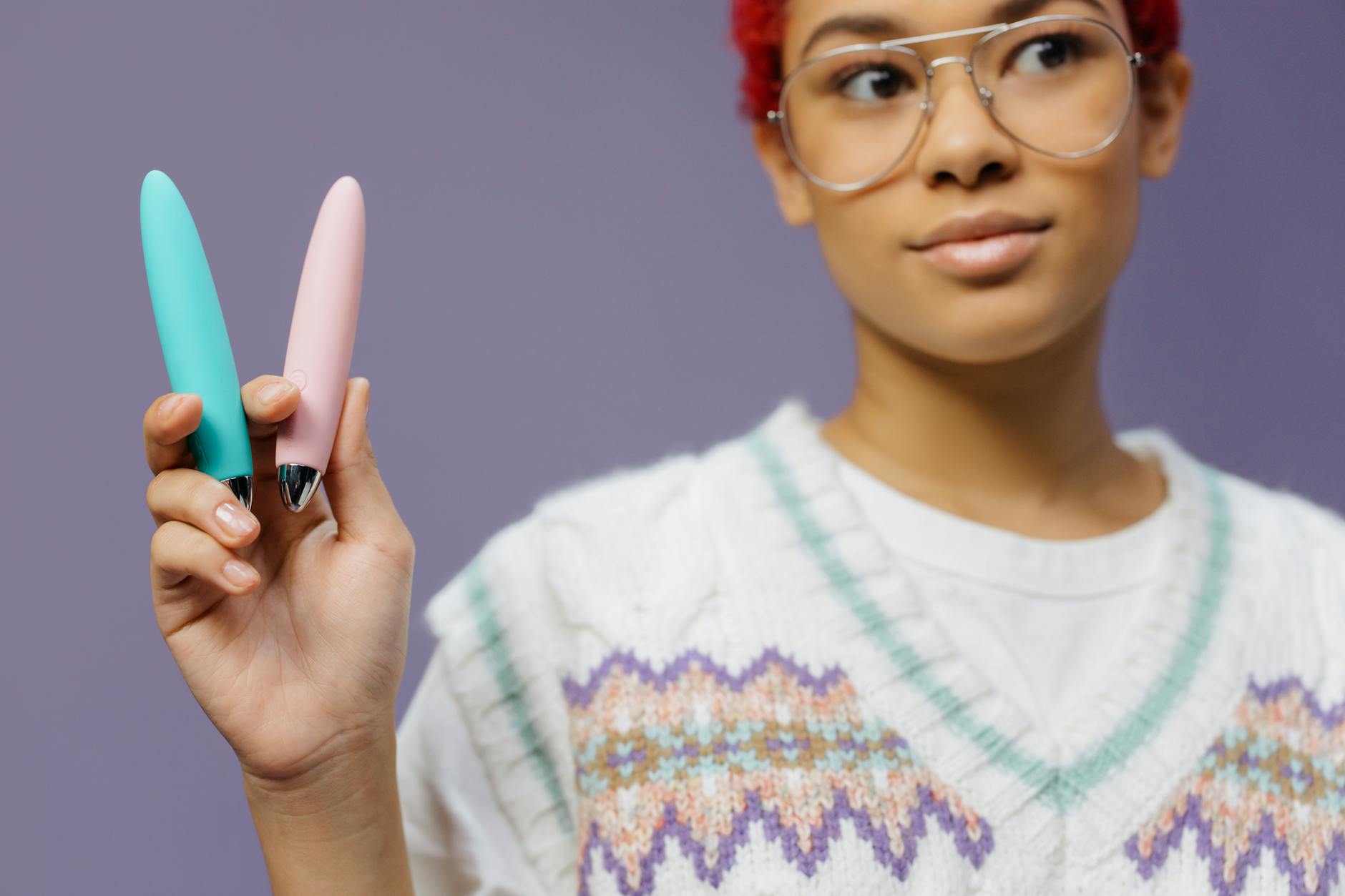
Let's start with what breakup does to your body
When a relationship ends, your nervous system doesn't just grieve the person. It grieves the routine, the touch, the predictability. Your body is literally in withdrawal from familiar intimacy. For some people, that means numbness. For others, it means anxiety around touch itself. Both are normal, and both are reversible.
Here's what I've seen consistently in my practice: people assume their pleasure went away when really their trust in their own desire went away. There's a difference, and it matters.
The nervous system reset you actually need
After a breakup, your nervous system has been in a low-level stress response for weeks or months. Even if the relationship wasn't great, the body knew the pattern. Predictability, even bad predictability, is easier than the unknown. That's why solo pleasure can feel weird or hollow at first. It's not because you've lost capacity. It's because your nervous system is in a different state.
Three things happen when you start rebuilding solo pleasure intentionally.
First, you retrain your body to trust sensation from yourself instead of waiting for touch from someone else. This isn't spiritual or woo. It's straightforward neurology. Your brain starts cataloging what feels good without performance anxiety or someone else's timeline baked in.
Second, you get to define pleasure on entirely new terms. For years, your pleasure might have been calibrated around a partner's preferences, their timing, their insecurities, their needs. That doesn't disappear overnight. But solo practice is how you untangle your actual desire from what you learned to perform.
Third, you build confidence that your body works independently. This is massive after a breakup. It quiets the voice that says "I'm broken" or "I won't feel that again" or "I'm too old for this."
Why clitoral vibrators matter for breakup recovery specifically
Listen. I could talk about pelvic floor awareness or mindfulness or journaling. Those have their place. But if your nervous system is dysregulated after a breakup, sometimes what you need first is reliable pleasure. Not complicated. Not performance-based. Just simple, consistent sensation.
This is where something like the Lem works. A lemon clitoral vibrator using suction technology gives you steady, non-numbing stimulation without requiring the mental bandwidth that manual touch sometimes does early on. You can turn it on and let your body respond without thinking about whether you're "doing it right."
The suction pattern actually mirrors natural arousal more closely than traditional vibration. It triggers the parasympathetic nervous system. Your body starts to relax while also building sensation. For someone whose nervous system is in breakup mode, that combination is particularly useful.
Starting solo: the practical steps
If you're rebuilding pleasure after a breakup, don't jump into intensive sessions. That's not reintegration. That's performing recovery.
Start with exploration without orgasm as the goal. Lie down somewhere comfortable and private. Spend ten minutes just noticing what happens when you touch your own body without any device. No pressure to feel aroused. Just observation. What feels warm? What feels tense? Where does your attention go naturally?
Then introduce a lemon adult toy like the Lem on a low setting. Spend another ten minutes just sensing what's different when you add gentle suction. Don't chase an orgasm. Just notice. Many people report that this exploratory phase is more helpful than any first orgasm would be because it rewires the neural pathway from "my body is for someone else's pleasure" to "my body gives me information about what I want."
After a few weeks of this, you'll probably feel your nervous system settle. That's when orgasm might actually matter again. And when it does, you'll notice it's different. It belongs to you in a way it might not have before.
The unexpected grief that shows up
Here's something nobody warns you about: rebuilding solo pleasure sometimes triggers sadness. You're lying there with a lemon clitoral vibrator, your body's doing the thing, and suddenly you're crying. It's not because something's wrong. It's because your nervous system is finally calm enough to process what you've been holding.
That's not a sign to stop. That's a sign to keep going. Pleasure and grief are not opposites. Your body can hold both. Let it.
If the sadness feels overwhelming or keeps you from engaging with your own body for weeks at a time, that's worth checking in with a therapist about. Breakup trauma is real, and sometimes it needs more than solo pleasure can provide. But occasional tears while reconnecting with your body? That's part of the process.
How long does this actually take
I hate vague timelines. Here's what I tell people: most of my clients report feeling noticeably different pleasure within four to six weeks of consistent solo practice. Not "back to normal." Different. Often better because it's finally entirely theirs.
Some people get there faster. Some take longer. Your timeline depends on how long the relationship was, how it ended, whether there's unresolved trauma, and how much you're practicing. But four to six weeks is the range where most people start to report that their body feels like it belongs to them again.
Consistency matters more than duration. Three times a week for fifteen minutes rebuilds more than once a month for an hour. Your nervous system responds to patterns. Rebuild one.
What if you're not feeling anything yet
This is the question I get constantly. "I've tried and I just feel numb. Am I broken?"
You're not broken. You're protected. Your nervous system has put a temporary circuit breaker on pleasure because the association between pleasure and pain is too fresh. This is adaptive. It's not permanent.
If numbness is persistent, check in with these:
Are you stressed about other things? Breakup trauma plus job stress plus financial worry means your body's in survival mode. Pleasure requires nervous system resources you don't have right now. That doesn't mean give up. It means be gentler and more patient.
Are you in a space where you can actually feel safe? Not just physically safe. Psychologically safe. If you're in a shared living space or you keep getting triggered by reminders of your ex, your nervous system won't let you access pleasure. It's on guard duty.
Are you comparing this to how pleasure used to feel? This is the most common mistake. You expect solo pleasure to feel like it did with a partner, and when it doesn't, you assume something's wrong. It will feel different. Different doesn't mean worse. It means you're not performing for an audience anymore.
When to reach out for support
If you've been rebuilding solo pleasure for three months and you're still completely numb, talk to a therapist. That's not a personal failure. That's your nervous system telling you it needs professional support.
If pleasure is available but shame keeps hijacking the experience, that's worth exploring with someone trained in sexual shame and trauma. Breakups sometimes resurrect older stuff. Older hurt from family, religion, previous relationships. A good therapist can help you untangle that.
If you have a new partner and you want to rebuild shared pleasure, check out our guide on how to use a lemon vibrator for better orgasms with a partner. But honestly? Do the solo work first. Your body needs to remember that it can feel good independent of someone else's presence. Everything else follows from that.
The part nobody talks about
Rebuildging pleasure after a breakup isn't about getting back to where you were. It's about getting to somewhere new. You get to decide what pleasure means now. You get to explore without the weight of someone else's preferences. You get to find out what you actually like instead of what you learned to tolerate or perform.
That freedom is disorienting at first. It's also incredibly powerful. Most people I work with say that their pleasure after the breakup is more satisfying, more reliable, and more genuinely theirs than it ever was in the relationship. That's not because their ex was bad. It's because now their body belongs entirely to them.
FAQ: Rebuilding pleasure after breakup
How long should I wait after a breakup before using a lemon vibrator?
There's no magic number. Some people need two weeks. Some need two months. The question to ask yourself is: Am I doing this because I want to, or because I feel like I should be "over it" by now? If it's the latter, wait. If you're genuinely curious about reconnecting with your body, that's the signal to start. Pressure from yourself or others to "move on" through pleasure usually backfires.
Can using a clitoral vibrator make me feel more lonely?
Sometimes, yes. And that's okay. Breakup loneliness is going to show up in different contexts. Solo pleasure isn't the cause. It's just a place where you're noticing it. The loneliness would be there anyway. What matters is whether you can sit with it and still be kind to your body. If solo pleasure consistently makes you feel worse for hours afterward, scale back and give yourself more time.
What if I feel guilty using a lemon adult toy after the breakup?
Guilt often means there's a story underneath. Maybe it feels like you're betraying your ex even though the relationship is over. Maybe you were taught that pleasure alone is shameful. Maybe you're worried that moving on physically means you didn't really love them. These are real, and they need attention. Shame usually settles when you can identify where it's coming from. If guilt keeps showing up, that's worth talking through with someone.
Is there a right way to use lemon vibrators for breakup recovery?
No. The right way is whatever way feels good to your body right now. Some people like to use them with a lot of lube and take their time. Some people like quick, high-intensity sessions. Some people alternate between different intensity settings. Your body will tell you what works if you let it. There's no performance standard for solo pleasure.
Can I use a lemon clitoral vibrator even if I haven't felt aroused in months?
Yes. Arousal isn't always a prerequisite for the starting point. Sometimes your body needs consistent gentle sensation before arousal can even register. You can use a vibrator on a low setting just to rebuild the neural pathway of "pleasure is available to me." Arousal might come later. It often does once your nervous system settles.
How do I know if I'm healing or just distracting myself?
Healing usually involves some discomfort. Distraction is smooth and numbing. If your solo pleasure practice brings up feelings, grief, memories, or complexity, that's probably healing. Your body is processing. If it feels like you're constantly escaping into sensation and never sitting with what's underneath, check in with yourself about that pattern. Both can happen. The goal is healing, not escape.
Pleasure belongs to you. After a breakup, it's worth remembering that and rebuilding it intentionally.