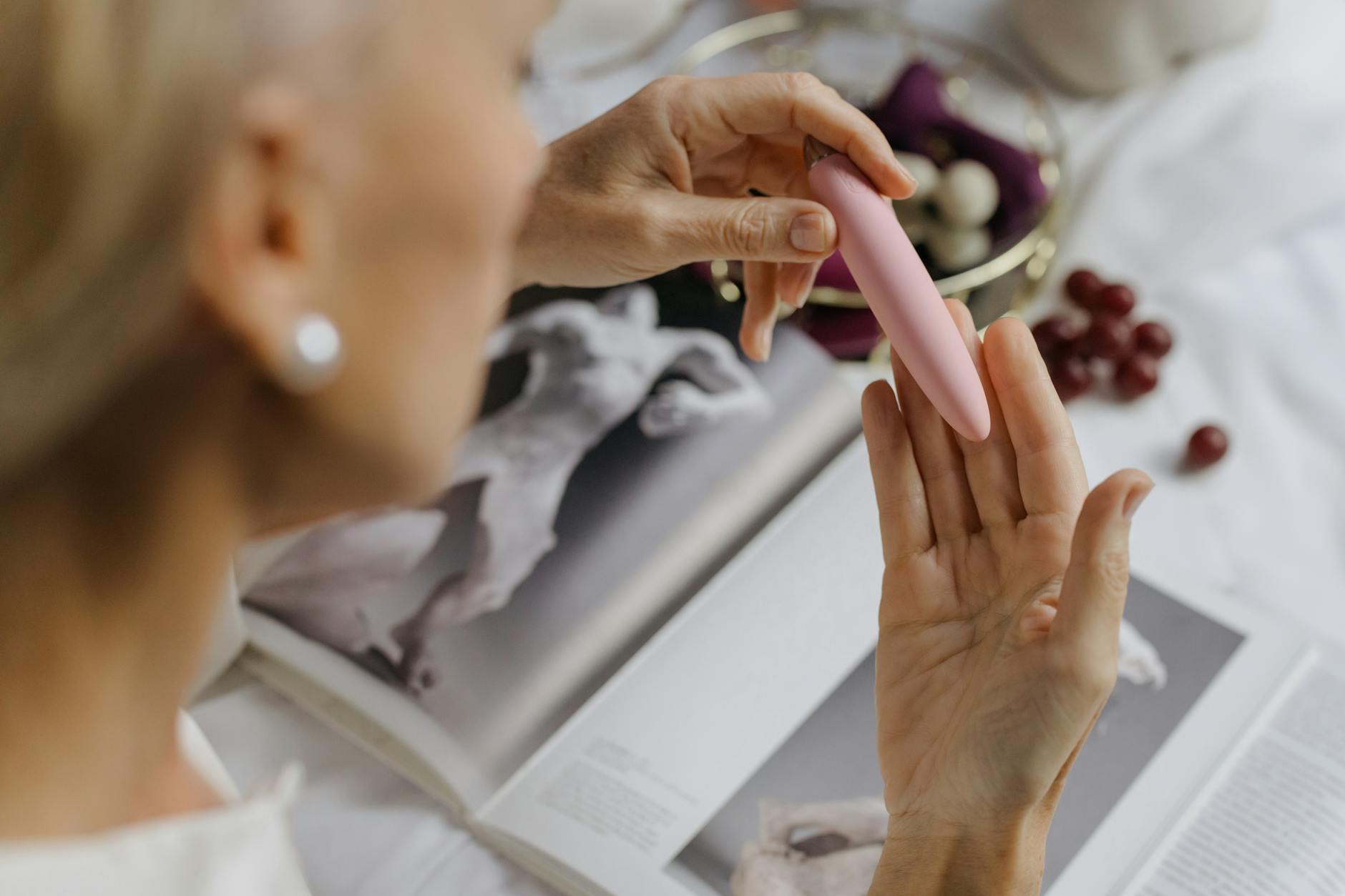
How to Use a Lemon Vibrator When Recovery From Pelvic Surgery Limits Touch
Let's be real. After pelvic surgery, touch feels complicated. Your body is healing, your mind is probably anxious about "doing it right," and the idea of pleasure feels distant—or worse, forbidden. But here's the thing nobody tells you: pleasure isn't something you have to schedule for six months from now. It's available right now, in forms that work with your recovery, not against it.
If you've had a C-section, hysterectomy, fibroid removal, endometriosis excision, or any pelvic procedure, lemon clitoral vibrators designed like the Lem offer a specific advantage. They work via gentle suction and pulsation rather than deep pressure or penetration, which means you can explore sensation without triggering surgical sites or aggravating healing tissue.
This isn't about rushing recovery. It's about reclaiming agency over your own pleasure while your body does the work it needs to do.
The surgical recovery timeline actually works with gentle vibration
Here's what doctors don't usually explain: the healing timeline has windows. You're probably cleared for "pelvic rest" for 4-6 weeks depending on your surgery—no penetration, no heavy lifting, no intense friction. Most providers don't mention sensation, exploration, or external play at all, which creates a vacuum of confusion.
External clitoral stimulation via suction-based vibrators falls into a different category than penetration. Your clitoris doesn't have sutures on it. It doesn't have surgical staples. What it does have is nerve endings that are still fully functional, even while your pelvic floor, uterus, or abdominal wall heals.
The key is matching intensity to your healing phase. In weeks 1-3, you're probably not thinking about pleasure at all—pain, compression, maybe numbness from anesthesia. By week 3-4, some people notice sensation returning. By week 6+, most people feel ready to explore again, though everyone's timeline differs.
With a lemon vibrator, you can start incredibly gently. Pattern 1 on the Lem is subtle—barely-there suction. No pressure directly into sensitive areas. No jarring patterns. It's the opposite of the aggressive, one-note stimulation that can feel invasive when your body is already managing pain.
Why suction-based vibrators (not traditional ones) matter post-surgery
There's a major difference between traditional vibrators and suction-based lemon clitoral vibrators, and it's crucial for post-op bodies.
Traditional vibrators buzz. They create continuous or pulsing vibration through friction against tissue. After surgery, when your pelvic floor is swollen, tender, or unstable, friction can feel aggressive. It can trigger pain, irritate scar tissue, or create pressure where you have none.
Suction vibrators work through gentle air pulse technology. They create a rhythmic vacuum effect—think of it like the difference between pushing and drawing. The Lem's design means you're not pressing into your body; the toy is drawing skin gently into the cup. It's less percussive, less invasive, and infinitely more controllable.
This matters because post-surgical bodies have altered sensation and reduced tolerance for pressure. Suction gets around that limitation. You're not fighting inflammation or scar tissue with force—you're working with sensitivity in a way that actually feels manageable.
The emotional piece nobody talks about
After pelvic surgery, pleasure sometimes feels complicated emotionally. Your body did something unexpected. Maybe it developed a condition. Maybe something went wrong. Your relationship with that part of yourself might be tense, or grieving, or just confused.
Reconnecting to sensation isn't just about physical healing. It's about rebuilding trust in your body's capacity for pleasure after it's been through a medical event.
Start small. This isn't about having an orgasm—orgasm can come later. The first time you use a lemon vibrator during recovery, the goal is simply to notice sensation. To remember that your clitoris still wakes up. That pleasure is still available to you. That your body didn't break permanently; it's just healing.
Many people find that reclaiming solo sensation first makes it easier to reconnect with a partner later. You're not performing or managing anyone else's needs. You're just relearning your own language.
When to actually start—and how to know if you're ready
Check with your surgeon or OB-GYN before you use any vibrator post-op. I know that sounds like the cautious answer, but it's real: they know your specific procedure, your complication history, your scar tissue landscape. What's fine for a routine C-section recovery might not be okay for complex endometriosis excision.
Generally, once you're cleared for "normal activity" (around 6-8 weeks for most procedures), external clitoral play is usually fine. Some people get that clearance earlier; some need more time. The signal is usually when you stop bleeding, pain medication becomes optional, and you can walk and sit without significant discomfort.
If you want to start earlier, ask directly: "Is external clitoral stimulation okay?" Most providers will say yes, because it carries virtually no mechanical risk to internal healing. You're not penetrating. You're not creating pressure internally. You're just creating sensation on skin that's already had plenty of time to be left alone.
The actual technique: starting low and respecting your body's feedback
Here's the practical part.
First time: use it on your own, when you have no time pressure. Maybe on an evening when your partner is out, or a morning when you can have 20 minutes to yourself. Set the Lem to pattern 1 or 2—the gentlest settings. If this feels new, that's fine. You're relearning.
Start without lubrication. Post-surgery tissue is often already sensitive; excess lube can sometimes feel sloppy rather than pleasurable. You can always add water-based lube if things feel dry or uncomfortable, but many people find they don't need it.
Apply the suction cup slowly. Don't jam it on; ease it into contact. The gentle vacuum should feel like a soft draw, not a hard tug. If it feels intense or uncomfortable, go down one pattern level or release and restart.
Listen to what your body tells you. Some people feel minimal sensation at first—that's normal if you're numb or swollen. Some people feel quite a lot immediately. Neither means anything is wrong. Your nervous system is just recalibrating.
Sessions can be 5-10 minutes to start. There's no rule that says you have to build to 20 or 30. If you feel satisfied, pleasure-flooded, or just reconnected after 5 minutes, that's the win. Duration doesn't matter. Consistency and presence do.
Bringing your partner into recovery-phase pleasure
If you're partnered, the conversation is important. Your partner might feel nervous about hurting you. They might feel guilty about their own needs during your recovery. Or they might not know how to approach you differently.
Honestly, telling your partner "I want to explore gentle pleasure with this lemon vibrator while I'm healing" does several things. It says, "I'm not fragile, I'm just being smart." It says, "Pleasure is still part of our relationship." It says, "Help me with this."
Your partner can be present while you use it—just as presence, not necessarily as direct participation. That alone can rebuild intimacy. You're not hiding your body or your pleasure. You're inviting them to witness your healing and your reclamation.
Or they can use it on you, at your direction. Many couples find that once they have permission to be creative, recovery becomes a chance to reconnect differently. Not the way you used to, but in a way that might actually feel more deliberate, more present.
What to watch for—and when to pause
Pain that feels sharp or located at the surgical site means stop. Burning sensation might mean your tissue is too tender. Dizziness or unusual bleeding means tell your doctor.
General soreness that resolves within an hour is usually normal. Your pelvic floor has been through a lot and sensations feel unfamiliar. But if something feels consistently off, trust that.
Also, if you're not feeling ready emotionally, don't force it. Recovery is physical and psychological. Your body might be cleared medically, but your mind might need more time. That's not weakness; that's wisdom.
The bigger picture: pleasure as part of healing, not separate from it
Pelvic surgery is an intervention. Your body needed help. But the goal of healing isn't to return to neutral—it's to return to wholeness, which includes pleasure. When healthcare conversations skip right past that, it leaves people in a weird limbo where pleasure feels like something you'll "get back to eventually."
Actually, reconnecting to gentle sensation while you're healing can accelerate emotional recovery. It tells your nervous system, "This part of you is still alive. This part of you still feels good. You're going to be okay."
A lemon clitoral vibrator, specifically the suction-based kind like the Lem, is built for exactly this kind of accessible, gentle exploration. You're not managing complicated penetration or intense vibration patterns. You're just rediscovering sensation at your own pace, in a way that respects where your body actually is.
That's not rushing recovery. That's being intentional about it.
People also ask
How long after surgery should I wait before using a lemon vibrator?
Most surgeons clear external clitoral stimulation around 4-6 weeks post-op, once you've stopped bleeding regularly and pain is manageable. Always confirm with your doctor based on your specific procedure. Internal recovery and external sensation recovery are different timelines—external usually gets the all-clear first.
Will using a lemon clitoral vibrator affect my incision or scar tissue?
No, assuming your incision is healed and you're cleared by your surgeon. Your clitoris has no surgical site on it; it's fully separate from any pelvic incision. Suction-based vibrators like the Lem create no internal pressure, so there's nothing to disrupt internal healing. The whole point is external sensation only.
What if I feel numb or can't feel sensation yet?
Numbness after pelvic surgery is common and usually temporary. Nerve endings recover on their own timeline—sometimes weeks, sometimes months depending on the procedure. Using a lemon vibrator gently can actually help wake up those nerves. If numbness persists beyond three months, mention it to your doctor, but there's no harm in exploring sensation as it returns.
Can my partner use the lemon vibrator on me while I'm recovering?
Absolutely, if you want that. Communication is key—let them know which patterns feel good, what pressure is comfortable, and what areas feel sensitive or off-limits. Some couples find that co-exploration during recovery rebuilds intimacy that felt disrupted by surgery and healing needs.
Is it normal to have pain or discomfort when using a lemon vibrator post-op?
Minor soreness can happen as your pelvic floor readjusts to sensation. But sharp pain, burning, or pain that doesn't resolve within an hour means pause and check with your doctor. Your body is usually pretty clear about when something isn't working. Listen to it.
Will using a lemon vibrator delay my physical recovery?
No. External clitoral stimulation carries no mechanical risk to internal healing. You're not penetrating, you're not creating intra-pelvic pressure, and you're not affecting anything that's actually mending. Your surgeon cleared you for normal activity—this is part of that.
If you're navigating recovery and want to rebuild pleasure at your own pace, consider starting with a <a href="/products/essentials">Lemon clitoral vibrator designed for sensitivity and gentleness</a>. And if questions come up, <a href="/contact">reach out—we're here to help you feel confident about your choices</a>.