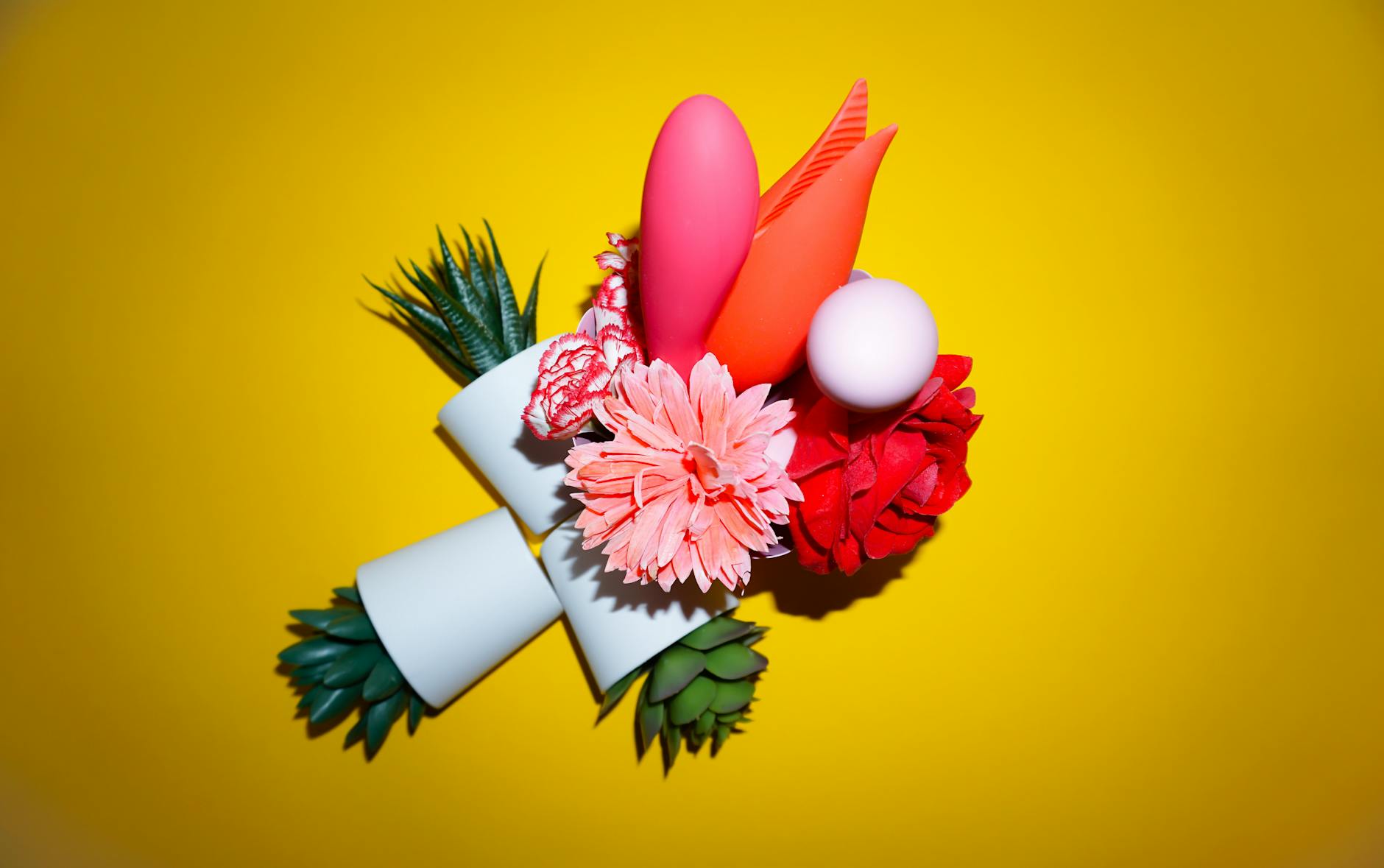
Here's what nobody talks about
You can have a great partner and still feel more aroused alone. You can be in love and still experience deeper orgasms with a lemon vibrator than with anyone else in the room. This doesn't mean something's wrong with your relationship. It means you're paying attention to a gap that most people ignore until it becomes a problem.
That gap is real data. Your body is telling you something about presence, autonomy, and what you actually need. The question isn't how to fix it. It's how to understand it.
Why solo pleasure feels different (and why that matters)
When you're alone with a lemon clitoral vibrator, you're not managing anyone else's experience. You're not checking in, performing, or modulating your responses to suit someone else's rhythm. Your nervous system isn't split between your own pleasure and someone else's expectations.
That's not a small thing. Research on female pleasure shows that the mental load of partnership can actively suppress arousal. You're running a background process called "partner management" even during sex. Alone, that process shuts down.
Solo pleasure with a lemon vibrator also means zero performance pressure. Many people report that their most intense orgasms happen when they're not worried about how they look, how long it takes, or whether they're being "good" partners. Alone, you can chase whatever feels good without editing yourself.
The nervous system piece (why the Lem works better when you're relaxed)
Your body has two main nervous system states: sympathetic (fight-or-flight) and parasympathetic (rest-and-digest). Deep pleasure requires parasympathetic activation. When you're alone, your nervous system can fully relax. When a partner is present, there's often a low-level alert activated, even in loving relationships.
A lemon vibrator's suction mechanism is designed to stimulate without the intensity of direct friction. When your nervous system is already relaxed (which happens more easily alone), that gentle stimulation can trigger a faster, deeper response. The combination of actual relaxation plus the tool itself creates a feedback loop.
This isn't about your partner being too intense or not intense enough. It's biology. Your body simply responds differently when the threat-detection system is offline.
What the gap might be telling you
There are four things this disconnect could signal.
1. You need more autonomy in partnered sex. Some people need to be the one controlling the tempo, the pressure, and when things happen. Ceding that control to a partner, even a loving one, disrupts arousal. The solution isn't less partnership. It's partnership where you retain steering power.
2. You're managing emotions that aren't being addressed. If you feel unsafe, unseen, or resentful with your partner, your nervous system registers that. Your body won't fully relax, even during sex. A lemon vibrator won't fix that. A conversation might.
3. Your partner's presence is actually triggering (in a non-traumatic way). Sometimes after years together, seeing a partner's face, hearing their breathing, or feeling their watching can create low-level distraction. That's common and fixable. It doesn't mean you don't love them.
4. You simply have different arousal profiles. Some people are wired for solo pleasure as their primary source of deeper sensations. That's not a relationship problem. That's biology. Many couples navigate this by having robust solo pleasure practices alongside partnered sex.
Using the Lem to explore what you actually need
Here's how to use solo time with a lemon vibrator as information gathering, not just pleasure.
Start by noticing the difference. Solo sessions with the Lem should feel like a diagnostic appointment. Pay attention to: How long before you feel aroused? What patterns or speeds trigger the fastest response? Does your mind wander? Do you feel any guilt, rush, or pressure? That baseline data matters.
Experiment with settings. The Lem has multiple intensity levels. When you're alone, you can explore those without worrying about pacing someone else. Note which settings create the most sustained pleasure. Which ones feel mechanical versus intuitive? This is valuable information for conversations with a partner later.
Notice where your mind goes. Some people think about their partner during solo pleasure. Others need fantasy, memory, or something completely removed from their real relationship. There's no "right" place for your mind to go. But knowing where it naturally gravitates tells you something about what your nervous system needs to relax.
Time it differently than you would with a partner. Alone, you might take 30 minutes. With a partner, you rush to 10. That gap matters. It suggests you might need longer warm-up time, or you might need permission to take longer without guilt.
Bringing this information into your partnership
Once you understand what the gap is, you have choices.
If you need more autonomy, you can ask your partner to step back during penetration or to let you guide the rhythm. If you need longer warm-up, you can ask for it explicitly. If you need a partner to not watch, you can ask for that too. If your nervousness is actually rooted in unspoken resentment or disconnection, you can address that separately from sex.
Some couples find that integrating toys into partnered sex helps. Using a lemon clitoral vibrator with a partner present (but not necessarily doing the using) can give you both the autonomy you need and the intimacy you want. You're still together. You're just not dependent on each other for the same sensation.

Photo by cottonbro studio on Pexels
Other couples decide that solo pleasure stays solo. That's also valid. The key is making an active choice instead of just accepting the gap.
The conversation to have (or how not to have it)
If this gap is noticeable enough that you're reading this, your partner might sense it too. Bringing it up doesn't require drama.
Start with truth, not blame. "I've noticed I feel different pleasure alone than I do with you, and I want to understand why" lands better than "I don't feel present with you." The first is curious. The second sounds like rejection, even if that's not what you mean.
Then share what you've learned. Maybe you need longer. Maybe you need different touch. Maybe you need to use a lemon vibrator together sometimes. Maybe you need partnership to look different than it currently does. Specificity helps. Vagueness creates defensiveness.
When to see a professional
If the gap feels like a chasm, or if you're using solo pleasure to avoid partnered sex altogether, talking to a couples therapist makes sense. Sometimes that disconnection is signaling something deeper that sex itself can't fix. Often it's a communication or autonomy issue that a professional can help untangle.
If you love your partner but feel more present alone, that's not a sign you should leave. It's a sign you should get curious about what partnership could look like if it honored how your nervous system actually works.
FAQ: Solo pleasure, partnership, and finding your rhythm
Why do I feel guilty about preferring solo pleasure with a vibrator?
Because we're taught that partnered sex is the "real" version and solo pleasure is a consolation prize. It's not. Solo pleasure with a lemon vibrator is a complete, valid form of sexuality. The guilt is cultural baggage, not truth. Shed it.
Can my partner and I both use a lemon vibrator together during sex?
Absolutely. Some partners take turns, some use multiple toys simultaneously, some use the Lem while also having penetrative sex. The toy doesn't replace partnership. It enhances it, or exists alongside it. You get to decide how it fits.
Does using a lemon clitoral vibrator alone mean I'm not attracted to my partner?
No. Attraction and pleasure response are different things. You can be wildly attracted to someone and still have a nervous system that responds more fully when alone. Those aren't contradictory.
How do I know if this gap is about my relationship or just about how my body works?
Pay attention to other signs. Do you feel emotionally connected to your partner outside of sex? Do you want to be around them? Do you feel seen and heard in other contexts? If those are solid, the gap is likely biological. If those are shaky, the gap might be pointing to a deeper issue.
Is it normal to orgasm faster with a toy than with a partner?
Yes. Toys don't have the variable factors that partners do. The Lem delivers consistent stimulation exactly where your clitoris is most responsive. A partner's attention is beautiful but less precise. Different doesn't mean better or worse.
Should I hide my solo pleasure practice from my partner?
Not ideally. Secrecy erodes intimacy. Honesty about solo pleasure, framed as something that actually helps you understand yourself and your needs, tends to bring couples closer. If you're afraid to mention it, that's worth exploring separately.
The real takeaway
That gap between solo and partnered pleasure isn't a failure. It's information. Some people build incredible relationships by ignoring it. Others transform their partnerships by paying attention to it. You get to choose what you do with what your body is telling you.
If you want to explore this further, consider reaching out to talk through what presence actually means for your relationship. Sometimes the gap narrows just from being heard.
Sources
Gottman, J. M., & Silver, N. (2015). The Seven Principles for Making Marriage Work. Harmony.
Nagoski, E. (2015). Come As You Are: The Surprising New Science That Will Transform Your Sex Life. Simon and Schuster.
Perez-Lopez, J. L., & Balog, Z. (2022). The Role of Autonomy in Sexual Response and Satisfaction. Journal of Sex & Marital Therapy, 48(6), 541-555.