
The clock is ticking. Or is it?
Let's be real. Most of us have internalized a timeline that doesn't exist. Sex should take this long. Foreplay should take this long. Orgasm should happen by now. And if it doesn't, you're broken or slow or not trying hard enough. Except none of that is true, and the belief that it is has quietly killed more pleasure than almost any physical issue.
The pressure to finish quickly is almost never about your partner. It's about you deciding somewhere along the way that your pleasure was less important than the performance of having had it. That distinction matters because once you see it, you can change it.
Why you feel like you're racing
There are usually three things happening at once. First, there's the actual clock. If sex happens right before bed or you've got a limited window, time becomes real. Second, there's the internal clock you've built from years of sex. You've probably timed yourself a thousand times without meaning to. Third, and most powerful, there's the idea that taking longer means something is wrong with you.
All three are fixable. The lemon clitoral vibrator is useful specifically because it changes your relationship to timing by giving you something to focus on that isn't the clock.
How a lemon vibrator rewires the rush
The Lem works through suction and pulse patterns. You're not racing your body toward orgasm. You're creating a sustained sensation that your nervous system can settle into. That's different from a traditional vibrator, which often feels like a timer you're racing against.
Here's what happens physiologically. When you use consistent, focused stimulation, your arousal has room to build gradually instead of spiking and plateauing. Your brain gets less caught in "am I there yet" and more caught in "what does this feel like right now." That shift is enormous.
The actual strategy
Three things make the difference between using a lemon vibrator to slow down and using it to speed up.
1. Start on pattern 1 or 2, not the highest setting. Most of us go straight to maximum intensity because we think that's how you finish fast. The opposite is true. Lower intensity forces you to build arousal slowly. Your body has to work. You have to stay present. By the time you reach higher patterns, you've already spent 15 or 20 minutes with sensation, and your nervous system is completely different.
2. Don't aim for orgasm. Aim for sensation. This sounds like therapy-speak, but it changes everything. The moment you stop treating the lemon clitoral vibrator like a tool to reach an endpoint and start treating it like a way to feel something, the rush vanishes. You're not working toward anything. You're experiencing something. That's when the magic happens.
3. Build intentional pauses. Use the Lem for 3 minutes. Stop. Touch yourself, your partner, or nothing at all. Sit in that sensation. Then go back. This fractures the timeline in your head. Your body doesn't feel like it's moving toward a finish line anymore. It feels like it's exploring something.
Partner pressure is different
If the rush is coming from your partner's anxiety (they're worried about their staying power, they've got somewhere to be, they want the experience to feel a certain way), a lemon vibrator won't fix that by itself. You need to talk about it. Specifically, you need to separate the conversation about your pleasure from the conversation about the sex itself.
Something like: "When I'm using this, I need space to feel what's happening without worrying about time. That means we might slow down. And that's the whole point." That's not a complaint. It's a request that actually makes the sex better for both of you.
The mental reset you need
The pressure to finish quickly is almost always about old rules you're following without knowing it. Rules like "sex should take about 20 minutes" or "if I take too long, they'll get bored" or "my body is too slow." None of those rules are serving you.
Here's what's actually true. Pleasure that lasts is better than pleasure that's fast. Arousal builds over time. Your body doesn't have a finish line. You're not racing anyone. And if you are, you've already lost the experience.
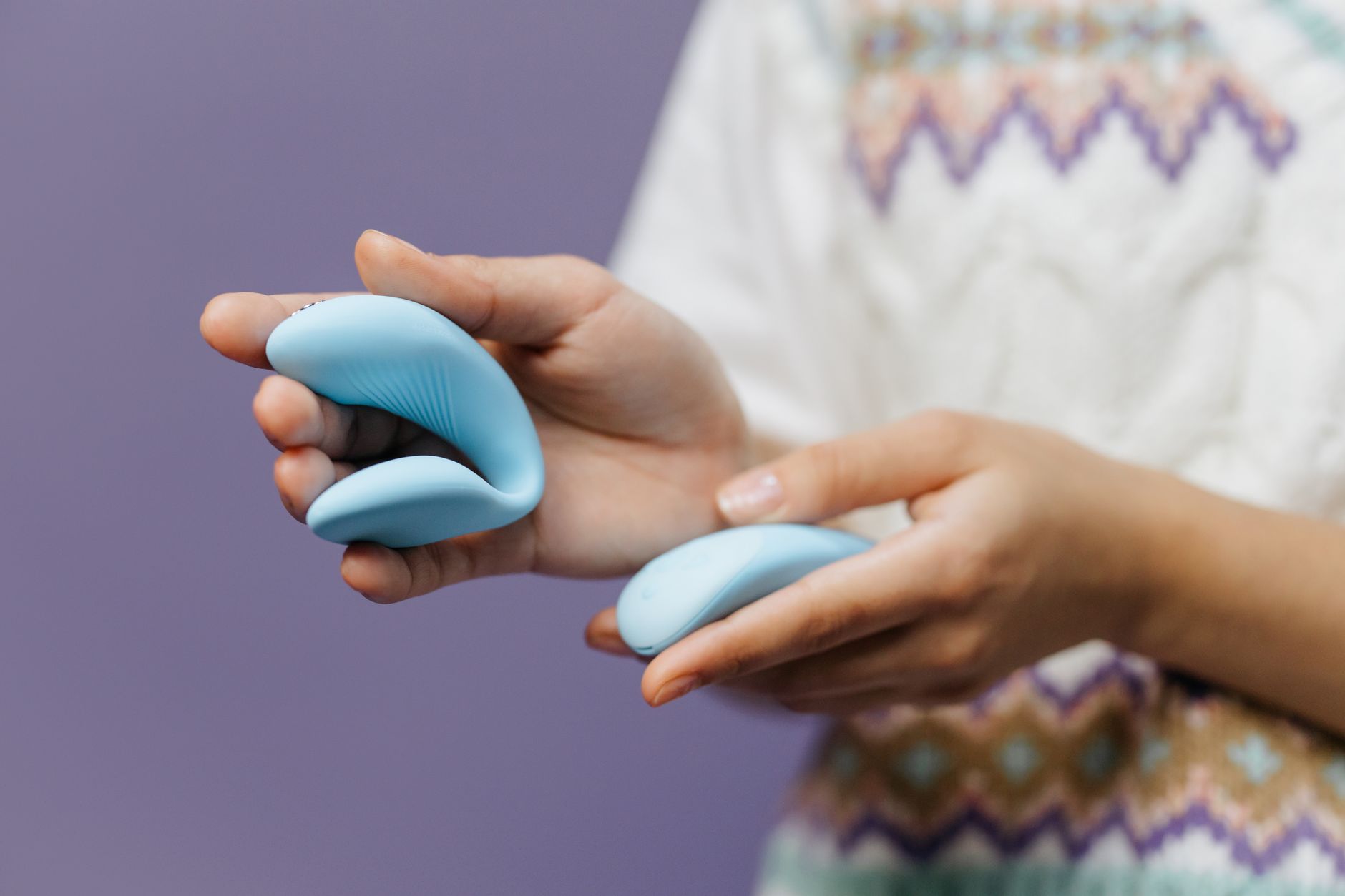
Photo by cottonbro studio on Pexels
When you pick up a lemon vibrator with the explicit intention of slowing down, you're making a statement to yourself. That your pleasure matters. That it's worth time. That you're worth time. That internal shift is what actually changes the experience.
Why slow sex feels better
There's a reason people who prioritize slow, sustained pleasure report higher satisfaction and more intense orgasms. It's not just the physical. It's also neurological. Your brain gets flooded with different neurochemicals when you're in that longer arousal window. Oxytocin builds gradually instead of spiking. Dopamine has time to create anticipation. You actually feel more.
That's not something that happens if you're watching the clock.
Setting boundaries with time
If you genuinely have limited time, that's a real constraint and not something to feel bad about. But you can still use a lemon vibrator to make that time count. Give yourself 10 minutes of intentional focus. Two minutes of each lower pattern. Then go higher if you want to finish. You'll feel like you had a real experience instead of just checked a box.
If you have more time, use it. There's no prize for finishing fast. There's only more pleasure for people willing to take their time.
For more on building connection in moments when time feels tight, check out how to use a lemon vibrator when foreplay feels one-sided or rushed. That post walks you through what to do when the pressure isn't just about timing but about whose pleasure is getting attention.
The permission you're looking for
You can take as long as you want. Your pleasure doesn't have a timer. You're not slow. You're thorough. And the lemon vibrator, a lemon clitoral vibrator specifically designed for sustained sensation, is a tool that reinforces that permission every time you use it.
You deserve to feel good. Not to finish. To feel good.
Frequently asked questions
Can a lemon vibrator help me last longer if I tend to orgasm too quickly?
Yes, but for a different reason than you might think. The Lem doesn't numb you or delay orgasm chemically. Instead, it helps you practice staying present with sensation. When you use lower patterns and build slowly, you train your nervous system to expand its window of pleasure. That means you can go longer before reaching climax because you're not rushing there mentally. The key is intentionality—start low, build gradually, and focus on sensation rather than outcome.
Should I be worried that taking longer means something is wrong with my body?
Not at all. In fact, longer arousal windows are biologically optimal. Your body needs time to fully prepare—lubrication develops, blood flow increases, nerve sensitivity heightens. Rushing that process actually makes pleasure harder to reach. Slower arousal is not a glitch. It's how bodies work. And adult toys like lemon clitoral vibrators are designed specifically to work with natural pace rather than against it.
What if my partner gets frustrated when I use a toy to slow things down?
That's worth talking about directly. If your partner's frustration is about feeling disconnected, you might invite them into the experience differently—having them hold the Lem, being close while you use it, focusing on connection rather than pace. If the frustration is about time pressure, that's a separate conversation about lifestyle and rhythm, not about the toy. You can use a lemon sexual toy as an opportunity to reset expectations, not as something to hide or feel bad about.
Is using a lemon vibrator cheating if it helps me finish faster on nights when I'm tired?
No. A lemon adult toy is a tool for your pleasure, and sometimes that means using it to slow down and sometimes it means using it efficiently. The point isn't to follow rules about how sex "should" work. The point is to create experiences that feel good. If you're tired and want to use a Lem briefly, that's valid. If you want to use it slowly even when you're tired, that's also valid. You get to decide.
How do I talk to my partner about the fact that I need more time?
Start with something simple: "My body works best when I'm not watching the clock. Can we try setting aside time specifically for my pleasure where there's no time pressure?" That's not a complaint about them. It's a request for the conditions where you can actually feel what's happening. Most partners respond well when they understand that giving you more time actually gives them a partner who's more present and satisfied.
What patterns on the Lem work best for slowing down versus speeding up?
Patterns 1 and 2 create the most sustained, meditative sensation. They encourage you to stay present because the feeling isn't overwhelming. Patterns 3 and higher build intensity faster. If your goal is to slow down and build gradually, start at 1 and spend at least a few minutes there. You can always increase intensity later. If you find yourself tempted to jump straight to high patterns, that's usually a sign the rush energy is still active. Slow it down intentionally.
Sources and research
This article draws on principles from the Gottman Method, which emphasizes presence and emotional attunement in intimate relationships. Research on sexual response cycles (Masters and Johnson) shows that arousal naturally takes longer than most people believe, and that attempting to rush this process reduces satisfaction and intensity. Studies on mindfulness in sexuality consistently demonstrate that focus on sensation over outcome increases pleasure and reduces performance anxiety.
For evidence-based information on sexual health and intimacy, consult a certified sex therapist or healthcare provider. Hellanancy products are designed to complement—not replace—professional guidance when needed.