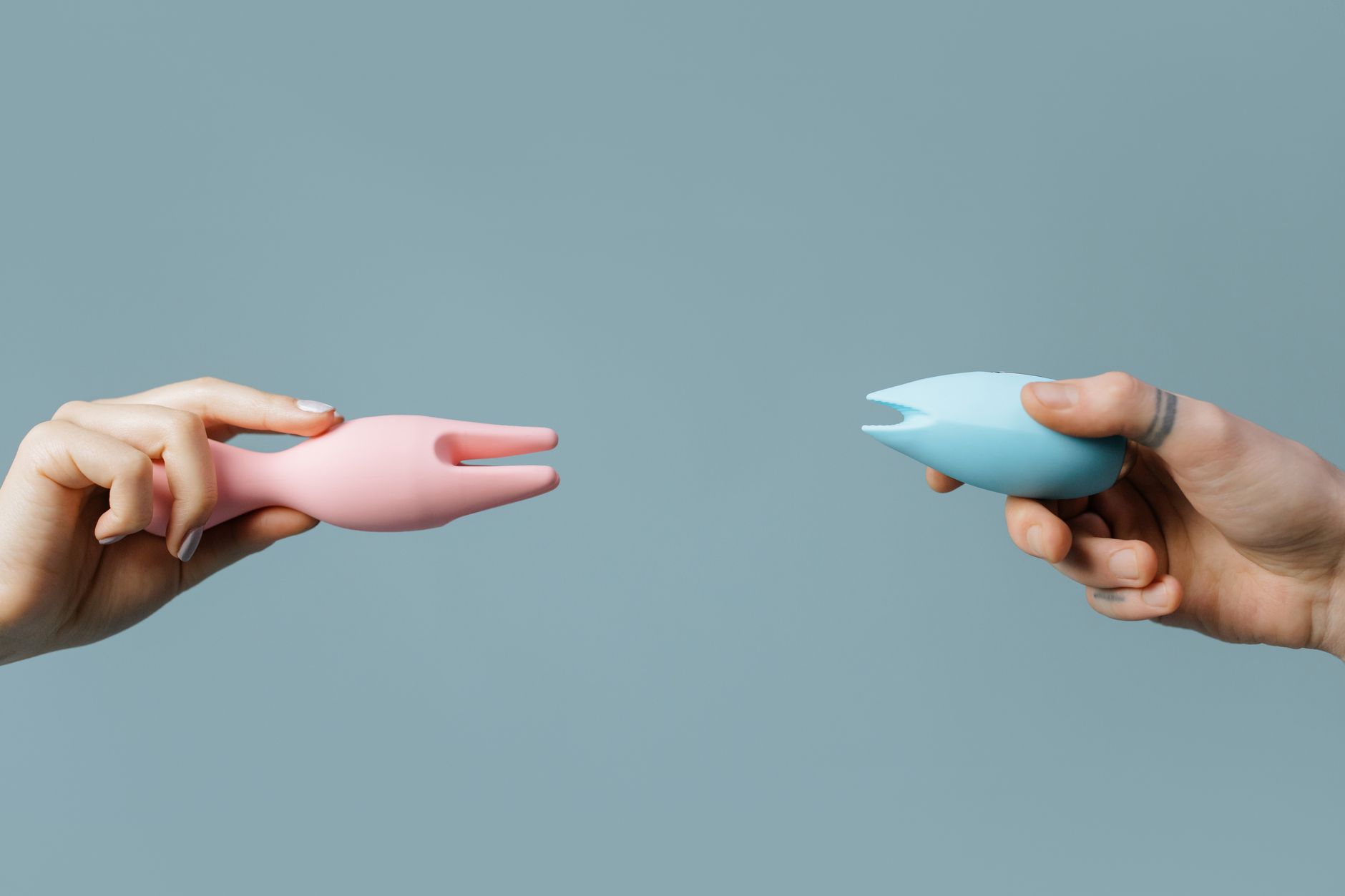
Let's be real about medication and sex
Your antidepressant is saving your life. Your antihistamine lets you breathe. Your blood pressure med keeps your heart stable. And then somewhere between week two and month three, you notice arousal has basically vanished. Touch feels muted. Orgasm either takes forever or doesn't show up at all. You're not broken, and you're not alone. Between 40 and 60 percent of people on SSRIs report sexual side effects. Add in antihistamines, certain blood pressure meds, and hormonal contraceptives, and you're looking at a genuinely common problem that almost nobody talks about.
The hard part isn't admitting it happened. It's knowing that talking to your doctor about it feels impossibly awkward, or worse, that they'll suggest switching meds as if that's simple. Sometimes it is. Usually it isn't. So you sit with the numbness, thinking you've just lost a part of yourself.
Here's what I've learned working with hundreds of people navigating this exact gap. A lemon vibrator, specifically something like the Lem with its suction-based stimulation, can rewire your nervous system's response and bring sensation back online when medication has turned everything down to gray.
How medication actually kills sensation
Different drugs work through different mechanisms, but the end result is often the same: your brain and body's pleasure pathway gets muffled.
SSRIs (selective serotonin reuptake inhibitors) are the biggest culprit. They increase serotonin to ease depression and anxiety, which is brilliant for mood. But serotonin also plays a role in sexual arousal and orgasm. More serotonin in some parts of your brain means less dopamine and norepinephrine in others. Dopamine is basically your desire chemical. Norepinephrine is what triggers physical arousal. Mess with the ratio, and your body stops sending the signals that say "this feels good."
Antihistamines are sneaky. They're in allergy meds, cold meds, even some sleep aids. They block histamine, which controls inflammation and immune response, but histamine also plays a quiet role in sexual arousal. Numb the histamine and sensitivity drops.
Beta-blockers (blood pressure meds) reduce norepinephrine, which is central to arousal. Certain antipsychotics and mood stabilizers increase prolactin, a hormone that suppresses sexual function. Birth control pills change your hormone ratios entirely, which some people experience as numbing and some don't.
The science: your nerve endings are still there. Your clitoris hasn't changed. Your capacity for pleasure is intact. What's actually happening is your brain's perception of sensation has been turned down. Think of it like the volume on your nervous system has been set to three when it used to be at eight.
Why a lemon vibrator works when you're numb
A clitoral vibrator, especially one using suction or air-pulse technology rather than traditional vibration, can help in three specific ways.
First, it bypasses the numbness through intensity and novelty. A standard vibrator on your skin might register as pressure. A lemon suction toy creates a rhythmic pulling sensation that's neurologically distinct from what your brain has learned to ignore. It's the difference between someone tapping your shoulder and someone tapping a specific pressure point. Your nervous system sits up and pays attention.
Second, suction-based stimulation engages different nerve endings. Your clitoris is packed with different types of nerve fibers. Some respond to vibration. Some respond to pressure. Some respond to rhythmic suction. Medication may have numbed your response to one or two of those, but suction often reaches the ones that are still awake. A lemon vibrator's unique mechanism makes it particularly good at this.
Third, it works below the threshold where your brain's numbness filter is running. This is the part nobody really talks about. When you're on medication that dulls sensation, your brain has literally retuned what counts as "enough" stimulation to trigger arousal. A vibrator can provide sustained, precisely patterned input that gradually retunes your brain's sensitivity baseline back upward. You're not forcing an orgasm. You're slowly training your nervous system to remember what pleasure feels like.
Start with the lowest setting, then be patient
If you've been numb for months, you can't jolt yourself back into sensation overnight. This is where people get frustrated and give up. They expect the vibrator to immediately unlock an orgasm like turning a key. Instead, the first few sessions might just feel like... sensation. Pressure. A hum. No fireworks.
That's exactly right.
Start with pattern one or two on your lemon vibrator. Place it directly on your clitoris with just enough pressure to make contact. Don't grip it. Don't search for instant pleasure. Just notice what you feel. Warmth. Texture. Vibration. For five to ten minutes, do nothing but observe. Your nervous system is recalibrating.
Do this three or four times before you expect more. By week two, your baseline sensitivity will have shifted slightly. By week three, you might notice arousal starting to build where there was nothing before. By week four, you might have an orgasm that feels weird and distant, and that's still progress.
The timeline varies wildly depending on which medication you're on, how long you've been on it, and your individual physiology. Some people see results in two weeks. Others take two months. What matters is consistency and patience. Your brain rewires slowly.
Build stimulation gradually as sensation returns
Once you're feeling something, resist the urge to crank it to max intensity immediately. The whole point is to rebuild your nervous system's sensitivity, not to override the numbness with brute force.
Move to pattern three or four. Introduce a slower buildup. Spend ten to fifteen minutes just warming up your arousal, moving through different patterns, noticing where sensation concentrates. Some people find that combining the lemon vibrator with light touch elsewhere on their body helps. Running your hands over your chest, inner thighs, or neck can activate other sensory pathways while the vibrator does the focused work.
Lubricant also matters, especially if your medication has affected natural lubrication alongside sensation. A water-based lube reduces friction that might feel uncomfortable on numb tissue and makes the stimulation feel more cohesive.
The biggest mistake I see is treating this like a sprint. "I should be able to orgasm by now." "Other people orgasm faster." You're not racing anyone. You're rebuilding neural pathways that a medication has temporarily suppressed. That's a marathon. Celebrate the small wins. Celebrate the fact that today you felt something you didn't feel last week. That's the actual progress.
When to consider talking to your doctor
I'm not saying medication is the problem and vibrators are the solution. I'm saying vibrators are a tool that can help you manage the gap while you figure out the bigger picture.
But here's the thing. If you've been on the same medication for months and sexual side effects are significantly affecting your quality of life, your doctor needs to know. Not in an embarrassed whisper. Directly. "I'm experiencing sexual side effects that matter to me. I'd like to talk about whether we can adjust the dose, switch to a different medication, or add something to counteract the effect."
Many SSRIs have a window of adjustability. Sometimes taking it at a different time of day helps. Sometimes adding bupropion (which affects dopamine) counteracts the sexual numbing. Sometimes switching to sertraline or a different class of antidepressant entirely makes a difference. These are real options, and your doctor should be having this conversation with you.
What a lemon vibrator does is buy you time and give you something to do while you're figuring out the medical piece. It's not a replacement for that conversation.
Solo exploration matters more than partnered sex right now
If you're partnered, the instinct is often to skip straight to using the vibrator during sex with your partner. Don't. Not yet.
Your job right now is to recalibrate your own pleasure. To learn where sensation lives in your body when numbed by medication. To rebuild the connection between touch and arousal in your own nervous system. That work is easiest to do alone, without the pressure of someone else's experience or expectations in the room.
Once you've spent a few weeks with the lemon vibrator solo and you can reliably feel arousal and get to orgasm on your own, then you can bring a partner into the picture. At that point, you're reintroducing them to a version of you that's already reconnected with sensation. You're not asking them to help you hunt for something that might not be there.
If you're single or unpartnered, this is even more straightforward. Use the time to learn your own pleasure under medication conditions. What patterns work? What settings? How long does it take? What other touches help? You're collecting data about your own body that will serve you whether you stay single or partner up later.
What to expect in the first month
Week one: Sensation might feel distant or muted. You're getting used to the device. That's normal.
Week two: You start noticing distinct patterns. Pattern three feels different from pattern one. That's your nervous system waking up.
Week three: Arousal starts to build during sessions where it didn't before. It might feel subtle, even fragile. Don't judge it. This is progress.
Week four: You might experience an orgasm, or you might just feel steadier arousal. Either is a win. Keep going.
Week five and beyond: Sensitivity continues to climb. Your brain's baseline for what counts as pleasurable stimulation has shifted upward. You can feel genuine arousal again.
Some people hit this timeline. Others take eight or twelve weeks. Your neurochemistry is unique. Trust your own timeline.
FAQ: Medication numbing and pleasure
Can I use a lemon vibrator if I'm on multiple medications that affect sensation?
Yes, but manage expectations carefully. The more medications that are suppressing sensation, the longer rewiring might take. The principles stay the same. Start low, be consistent, be patient. You might also talk to your doctor about whether all of those meds are still necessary at their current doses, or whether any can be adjusted or replaced without compromising your mental or physical health.
Will the sensation come back if I go off the medication?
Often, yes. Stopping an SSRI typically restores sexual function within two to four weeks. But you can't just stop medication on your own. Work with your doctor on a tapering plan if you're considering discontinuing. In the meantime, a lemon vibrator can help you manage the gap and also help you recognize when sensation is actually returning (you'll notice it first solo, before partnered sex).
Does numbing from medication feel different than numbing from other causes?
Similar in sensation, but the treatment is different. If you're numb from medication, the path forward is working with the medication issue while using tools like a vibrator to reconnect. If you're numb from anxiety, trauma, or relationship issues, the vibrator helps but you may also need psychological support. Often it's both. A lemon clitoral vibrator is useful either way.
If I use a vibrator while numb on medication, will it be less effective once I'm off the medication?
Nope. Your nervous system learns. Once you've rewired your pleasure pathways and rebuilt sensation using a vibrator, that knowledge stays. You'll actually have more tools at your disposal after you come off the medication, not fewer.
Should I tell my partner I'm using a vibrator to manage medication side effects?
That's your choice. Some people feel more comfortable keeping this part of their healing private until they've made progress solo. Others want their partner involved from the start. There's no right answer. What matters is that you're doing something active to address the problem instead of just accepting numbness as permanent. If you do tell them, keep it straightforward: "My medication is affecting sensation. I'm working on it." Full stop. You don't owe a play-by-play.
Can I get sensation back without a vibrator?
Yes, but more slowly. Manual stimulation, fantasy, extended foreplay, and time can all help rewire sensitivity. A vibrator just accelerates the process by providing consistent, intense input that jolts your nervous system more effectively than your hand alone. It's the difference between physiotherapy and stretching on your own. Both work. One is faster.
How long should I use the vibrator each session?
Start with ten minutes. Build to twenty or thirty as your arousal capacity increases. You're not aiming for an orgasm every time. Some sessions will be just about sensation, others about building arousal, others about reaching climax. Variety is good. Consistency matters more than duration.
You haven't lost pleasure permanently
Medication numbness feels permanent because it's been consistent for months. Your brain has gotten used to the gray. But neural plasticity is real. Your nervous system is designed to adapt and learn. A lemon vibrator works because it helps your brain relearn what pleasure feels like when medication has muffled the signal.
Start solo. Start low. Start patient. Your sensation will come back. And when it does, you'll know you didn't just passively wait for it. You actively brought it back.
If you're struggling to navigate medication side effects and pleasure, we're here. Reach out at Hello Nancy or check out our guide to getting started with tools that can help you reconnect.