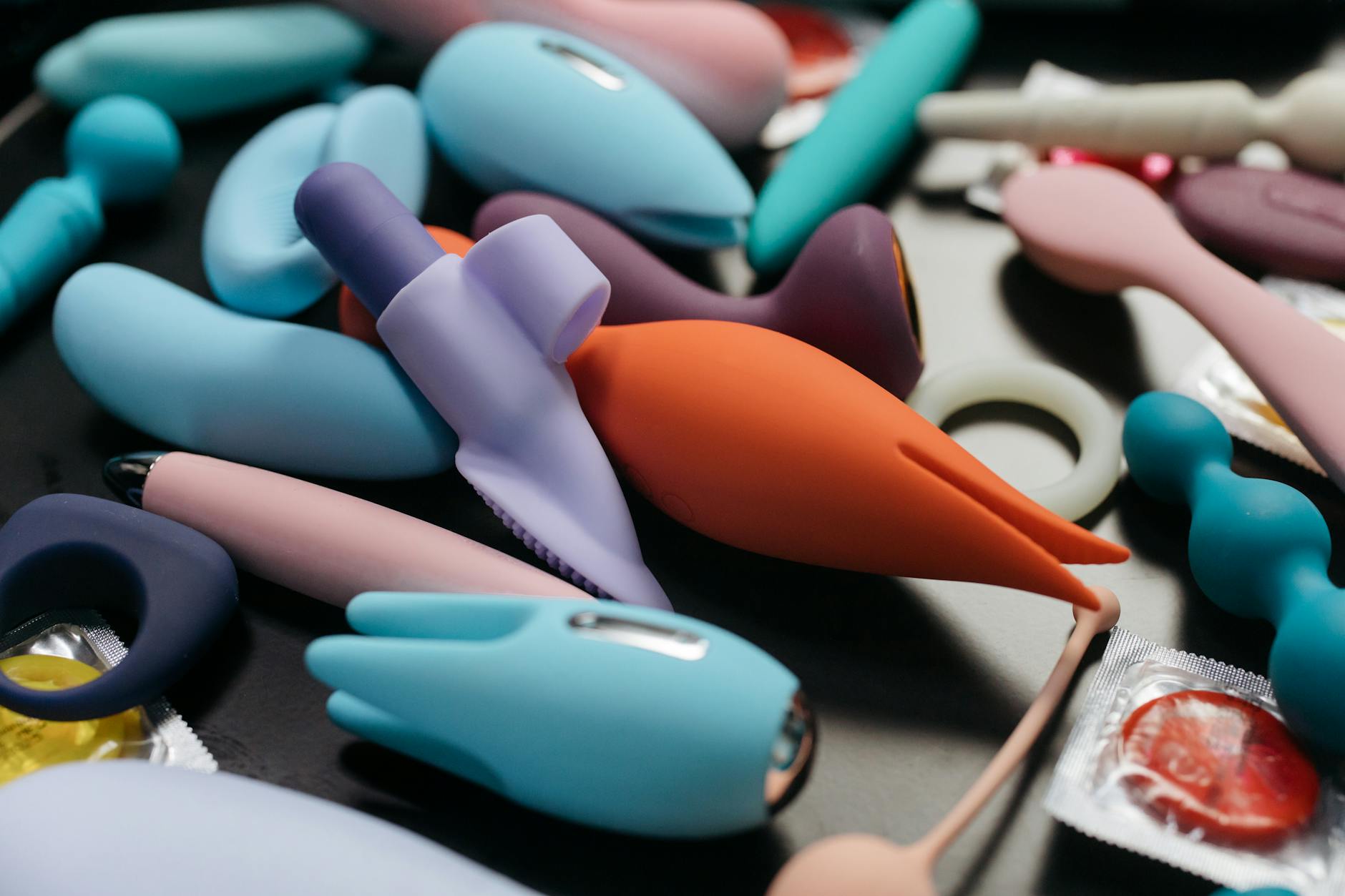
Here's what disconnection actually feels like
You're present but not there. Your partner touches you, and it registers somewhere far away, like you're watching from behind glass. Your own hand on your skin feels foreign. During sex, pleasure arrives muted, filtered, happening to someone else's body while you float above it observing. That's depersonalization. That's what disconnection from your body really is.
It's not the same as low libido. It's not that you don't want pleasure. It's that pleasure, when it comes, doesn't feel like it's reaching you. The signal exists but the receiver is off.
A lot of people with this experience think a vibrator will make it worse, that adding sensation on top of numbness will feel like shouting into the void. Actually, the opposite is often true. A lemon clitoral vibrator, with its specific suction-based mechanism, can be the tool that pulls you back into your skin.
Why depersonalization makes normal vibration feel pointless
When you're disconnected from your body, regular vibration tends to stay surface-level. It buzzes against skin that already feels foreign. Your nervous system isn't tracking it properly. The message doesn't get through.
Clitoral suction works differently. Instead of vibrating at a fixed frequency, a lemon vibrator creates a gentle pulse that mimics the natural rhythm of arousal. It's not aggressive. It doesn't demand. It whispers.
More importantly, suction engages your parasympathetic nervous system (the rest-and-digest side, the one responsible for pleasure) in a way regular vibration often doesn't. It feels less like an external buzzing against you and more like your own body waking up on its own terms. The sensation is less about friction and more about being drawn into presence.
Research on trauma and embodiment shows that activities requiring gentle focus, rhythmic engagement, and gradual sensation build can help reconnect dissociated nervous systems. That's the opposite of what a high-intensity wand does.
Starting when everything feels numb
Before you touch yourself, ground yourself.
Dissociation thrives in the abstract. Your job is to make this moment concrete. Feel the weight of your body against the chair or bed. Name three things you can see. Feel the temperature of the air on your face. Press your feet into the floor and notice the pressure.
This isn't spiritual. It's neurology. You're literally training your nervous system to stay present in your body instead of checking out.
Now pick a time when you already feel slightly more connected. For many people, that's morning. For others, it's after a walk or a shower. Not when you're deep in disconnection. That's trying to do a rebuild on an already failing foundation.
Use the lowest setting on your lemon vibrator. If you have one of Hello Nancy's clitoral suction toys like the Lem, start at pattern 1 or 2. The goal is not orgasm. The goal is sensation. You're training your nervous system to recognize "this is happening to me."
Spend time just feeling. Not trying. There's a difference. Trying means you're still split. Feeling means you're starting to fold back into yourself.
What happens when sensation starts to return
Don't expect fireworks. Reconnection is slow. The first session, you might notice the suction and nothing else. That's success. You felt something. Your nervous system registered it as "this is me."
Second session, you might notice that the sensation shifts when you breathe deeply. Third session, you might feel something in your inner thighs. Fourth session, you might feel a whisper of arousal. None of this is linear, and backsliding is completely normal.
The reason suction works so well for this particular struggle is that it's hard to dissociate from. You can space out with a vibration buzzing against you. You can't really space out when something is rhythmically pulling at you. Your body has to pay attention.
As sensation starts returning, your job is to notice without judgment. "Oh, I felt that in my pubic bone." Not "why didn't I feel it everywhere?" Observation, not evaluation.
Building a practice, not a destination
If depersonalization is tied to anxiety, grief, trauma, or a serious mental health condition, using a lemon vibrator is not a replacement for therapy. It's an adjunct. Think of it the way you'd think of a warm bath or a walk. It helps, but it's part of a bigger picture of coming home to yourself.
What I recommend to clients is a three-part approach:
First, grounding before you begin. Five minutes. Feet on the floor, eyes open, naming what you see and feel. This signals to your nervous system that you're staying present.
Second, the toy itself. Start at the lowest setting. No pressure to feel anything. No performance. You're just spending time with sensation. Ten to fifteen minutes.
Third, integration after. Sit with the experience. Notice what felt different, what felt the same, what you want to try next time. Write it down if that helps. Don't immediately jump into the rest of your day.
Repeat this weekly or as often as feels manageable. You're not looking for fireworks. You're building a habit of staying in your body.
When to bring a partner in
If you have one, this is a solo practice first. That's not a rule forever, but initially, you need to rebuild your relationship with your own sensation without the pressure of someone else being present or waiting for something.
Once you feel more connected, you can choose to share this with a partner. The conversation might be: "I've been feeling out of touch with my body. I'm trying something that's helping me reconnect. I'm not sure yet if I want you involved, but I wanted you to know what I'm doing."
If and when you do invite them in, they're there as a witness and a gentle presence, not as the focus. Sometimes partners think their job is to increase intensity. Actually, for this work, their job is to create safety and stay patient.
Common stumbling blocks and what they actually mean
You feel worse the first time. Your nervous system got activated and then didn't know what to do with it. That's normal. It's not a sign you should quit. It's a sign you need slower pacing, not cessation.
You can't feel it at all. You might be holding your breath, tensing your pelvic floor, or dissociating harder as a defense mechanism. Try adding breathing cues. Inhale for four, exhale for six. That helps parasympathetic activation.
You feel guilty or weird about using a toy for this. Check in with that feeling, but don't let it stop you. Reconnection work is just as valid as any other form of self-care. A lemon vibrator is not frivolous. It's a tool.
You get brief moments of feeling but they disappear. That's actually progress. Your nervous system is testing the waters. You're not back to baseline yet, but you're in dialogue with presence. Keep going.
The timeline nobody wants to hear
This isn't a two-week fix. If depersonalization is severe or chronic, reconnection is a months-long project. Some people start feeling significantly different in four to six weeks of consistent practice. Others need longer.
Honestly? The speed matters less than the consistency. Once a week with presence beats three times a week on autopilot.
The reason I'm telling you this is because I've watched people start this work, feel a little better after three sessions, assume it's broken, stop, and then wonder why they're dissociated again in a month. Reconnection requires showing up even when progress is invisible.
What happens when you actually reconnect
On a practical level, sensation returns. Pleasure stops feeling like it's happening to someone else. Your partner's touch registers. Your own touch registers.
On a deeper level, you remember that your body is you, not a separate thing you're in charge of controlling. That's huge. That changes how you move through the world.
The lemon vibrator is just the mechanism. The real work is deciding to stay present long enough for it to matter. A lemon clitoral vibrator like the Lem is designed to work with your nervous system's natural rhythms, not against them, which is why it's so effective for this particular work.
Start small. Stay consistent. Give yourself grace on the days when you feel further away than before. Your body's not broken. It just needs patience to come home.