Let's name the real problem first
You want to bring a lemon vibrator into your intimate life with your partner. But the conversation feels impossible. Maybe they've made comments in the past that coded toys as "unnecessary" or "a reflection on them." Maybe you're worried about hurting their feelings. Maybe you've tried before and it turned into a fight, so now it just sits in a drawer and you use it alone, which feels like its own kind of lonely.
Here's what I know from years of working with couples: the toy isn't the actual problem. The conversation is. And the conversation feels hard because you and your partner aren't talking about the same thing yet.
You're talking about pleasure. They're hearing rejection. You're talking about curiosity. They're hearing comparison. Until you separate those wires, no amount of framing will work.
Why the standard conversation fails
Most people try one of two approaches, both of which backfire. The first is the "soft sell." You casually mention a lemon vibrator like it's no big deal. You send a link. You say "some couples do this" or "it might be fun to try." What you're hoping is that if you make it small enough, they won't feel threatened. What actually happens is that they feel blindsided. Even the casual delivery signals that you've been thinking about this alone, making a decision about the relationship without them.
The second approach is the opposite. You go big. You have a whole speech prepared about how this will help you both, how many couples use toys, how research says it's normal. You're trying to persuade them with logic and statistics. What they hear is: you're wrong to feel uncomfortable, and I need to convince you to think like me.
Neither of these is a conversation. They're both transactions. Transactions fail when someone feels unheard.
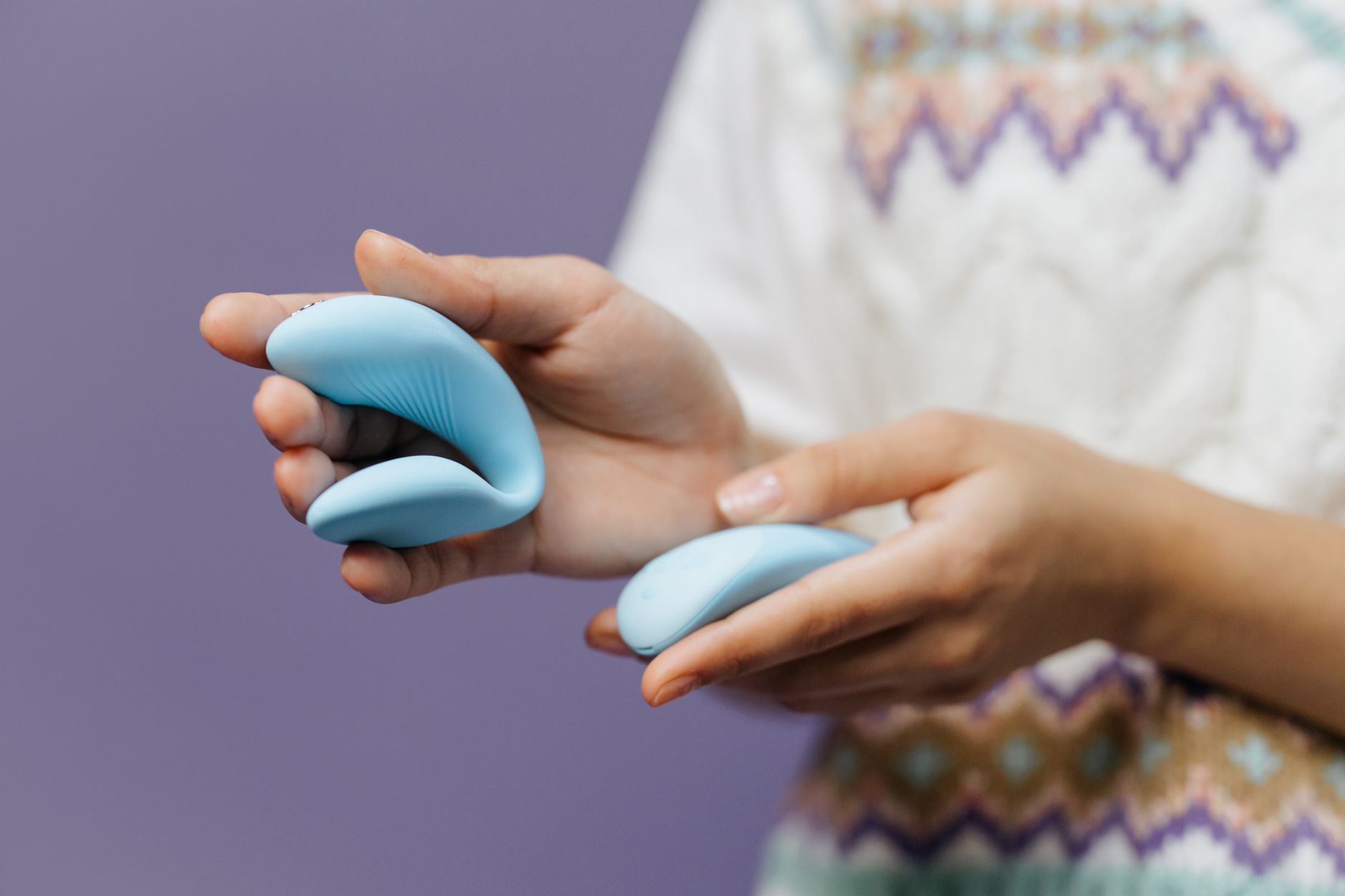
 Photo by Madison Inouye on Pexels
What actually works: the setup conversation
Before you mention the vibrator at all, you need what I call the "setup conversation." This is where you name the real gap. It's not about the toy. It's about pleasure, desire, and how you two talk (or don't talk) about sex.
You're looking for a moment when you're not in the bedroom and neither of you is activated or defensive. After dinner. In the car. A walk. Somewhere that feels neutral.
You open with honesty about yourself, not about them. "I've been thinking about our sex life, and I realize I'm not bringing the same energy I want to. I think part of that is that I don't feel super comfortable talking about what I actually want. I want to change that."
This is not an accusation. It's a vulnerability. You're claiming your own discomfort.
Then you ask them to do the same. "How do you feel about how we talk about sex?" And then you actually listen. Not to fix. Not to defend. Just to understand.
Many partners will say something like "I worry I'm not enough" or "I don't know what you want" or "I feel awkward about the whole thing." That's the gold. That's the real conversation. That's what's been sitting under the vibrator question the whole time.
The actual vibrator conversation (now that you know what's really going on)
Once you've established that you both want better communication, the vibrator becomes much easier to discuss. Because now it's in a context. It's not "I want a toy." It's "I want us to be able to explore pleasure together, and I want to practice being honest about what feels good."
You can say something like: "I've been curious about this thing called a lemon vibrator. Not because anything's wrong with us, but because I think it might help me relax into pleasure, and I'd like to try it together if you're open to it."
Notice what's in there. Honesty (I'm curious). Specificity (a lemon vibrator, not just "something"). Framing (it helps me relax, it's for both of us). Consent (if you're open to it, you're not pushing).
If they say no immediately, that's real information. "What's coming up for you?" Then listen again. It might be fear. It might be feeling insecure. It might be that they need to know this isn't about replacing them.
You can say: "I'm not interested in using this instead of you. I want to use it with you. I want to feel more pleasure in general, and I think that actually makes me better in bed, more relaxed, more present."
If they're hesitant but not closed off, you can offer a lower-stakes entry point. "Would you be willing to just look at it first? No pressure to use it right away. Just see what it is."
 Photo by Frank Schrader on Pexels
What to do if they still resist
Sometimes your partner will hear all of this and still say no. That's their right. But it gives you important information about what's actually going on.
Resistance to a lemon vibrator often isn't about the vibrator. It's about control, insecurity, or religious beliefs, or past trauma, or a dynamic where your pleasure has always been secondary to maintaining the relationship as is. Any of those things is worth naming and potentially working through with a couples therapist, not a sex toy.
But here's what you don't do: you don't use it secretly and hope they don't find out. You don't frame it as "they'll come around eventually." You don't sacrifice your pleasure indefinitely to keep the peace.
What you do is you decide. Do you want to stay in this relationship as it is? Or do you need your partner to be willing to grow with you on this? That's not a question I can answer. But it's the one you need to ask yourself, because using a vibrator behind your partner's back while telling yourself it's just temporary never works. It builds resentment and secrecy.
When they say yes (the easy part)
Once your partner has agreed to try a clitoral vibrator together, the actual pleasure part is usually straightforward. You might start with them watching you use it alone, which can be incredibly hot. You might incorporate it into foreplay. You might use it together and then move to other kinds of touch. How to use a lemon vibrator when your partner wants to watch is a specific guide for that dynamic.
But the real gift here isn't the orgasm, though that's nice. It's that you and your partner just proved that you can talk about something difficult and stay in the conversation. You can disagree and still say yes to each other. You can name fear and not let it run the whole relationship.
That skill applies to everything. Money. Kids. Time. Sex. The vibrator just happens to be the practice ground.
The maintenance conversation
Once you've integrated a lemon vibrator or other clitoral vibrator into your intimate life, you're not done talking. You just check in differently. "Is this still working for you?" "Want to try something different?" "How are you feeling about this?" These are lightweight conversations. They maintain the trust you built in the hard conversation.
Many couples get the big talk right, add the toy, and then assume they never have to talk about sex again. That's when things get stuck. The vibrator isn't magic. It's just a tool. The communication is the actual work, and it never stops.
FAQ
What if my partner thinks using a vibrator means I don't want them anymore?
This is the most common fear. The honest answer is that you can't think your way out of this for them. What helps is repeated experience. Use the vibrator together. Show them how you respond. Let them touch you while you use it. Over time, they'll feel the pleasure rather than the threat. But they have to be willing to show up for that. If they're not, that's about their relationship work, not your vibrator.
Can I use a lemon vibrator solo if my partner still doesn't want me to use one together?
Yes, your pleasure is yours. But the relationship question remains: if you want your partner to expand with you and they won't, you need to decide what that means for you. Solo use is valid. But it shouldn't be a secret that erodes trust.
How do I bring this up if we've already had fights about toys in the past?
Start with: "I know we've had tension around this before. I don't want that again. I'm wondering if we could talk about what's actually bothering you, because I don't think it's really about the toy." Then listen. Really listen. Often past fights happen because someone didn't feel heard the first time.
What if I'm the partner who's uncomfortable with vibrators?
That's real, and it's worth exploring. Where does the discomfort come from? Insecurity? A belief that pleasure should be simple? Religious training? Past relationships? Once you know the real source, you can work with it. A therapist can help. So can your partner asking good questions instead of pushing.
Is there an age where this conversation gets easier or harder?
It gets easier when couples have already built trust around other difficult topics. It gets harder when someone's identity is tied to being "enough" sexually. Age itself doesn't matter much. What matters is whether you've practiced being vulnerable together before.
Can I just leave a link and text it to my partner?
No. Texting this starts from a place of avoidance. Your partner will feel that. If you're nervous enough to hide in text, the conversation needs to happen in person. That's not because you're doing something wrong. It's because you're asking them to grow, and growth happens in real conversation.
The bottom line
You don't have a toy problem. You have a communication problem, and the toy is just where it's showing up. Fix the communication, and the toy becomes easy. Leave the communication broken, and no toy will work.
Start with the setup conversation. Name what's actually in the way. Listen more than you talk. Then, if you both want to, bring in the lemon vibrator. It's not the solve. It's the proof that you can solve things together. And that's actually the sexiest part.