Let's be real about intensity mismatches
One of you wants barely-there sensation. Whisper-soft suction, just enough to tease. The other wants strength that actually registers, patterns that build, intensity that demands attention. You're both right. You're also both stuck if you think compromise means splitting the difference and neither of you getting what you need.
The good news: lemon vibrators, especially ones with multiple intensity settings like the Lem, are built for this exact problem. The better news: the conversation you need to have about intensity is the same conversation that fixes almost everything else about partnered pleasure.
Why intensity mismatches happen (and why they matter)
Intensity preference isn't about how much someone likes sex. It's about nervous system sensitivity, history, and what "pleasure" actually signals to your body. Some people's nervous systems light up with subtle input. Others need stronger stimulation to cross the threshold into sensation. Neither is more "normal."
What gets messy is when couples think intensity mismatch is a compatibility problem instead of a logistics problem. It's not. A clitoral vibrator with adjustable settings solves it in minutes. But first you need to actually know what each partner wants, which requires the kind of conversation most couples skip entirely.
Starting the intensity conversation (without it feeling clinical)
Here's what I tell couples in my practice: the sexiest thing you can say to your partner is "Tell me exactly what you want." Not romance language. Specificity.
Before you even touch the Lem, ask each other these three things.
First: What does intensity mean to you? "Strong" to one person is "overwhelming" to another. Does your partner want consistent high intensity, or do they want it to build? Do they want variation within a session, or the same setting the whole time? This isn't a quiz. It's a listening exercise.
Second: Where's your sweet spot? Most lemon clitoral vibrators have 5-10 settings. Ask: on a scale of 1 to 10, where 1 is barely feeling it and 10 is almost too much, where do you want to start? Where do you want to finish? These might be different numbers, and that's the useful information.
Third: What does intensity feel like in your body? Some people describe it as depth, others as speed, others as the width of sensation. You might be talking about the same setting and experiencing it completely differently. Ask what sensation actually registers for them. Numbness versus sharpness, spreading versus concentrated, building versus immediate. The more specific, the faster you'll find the overlap.

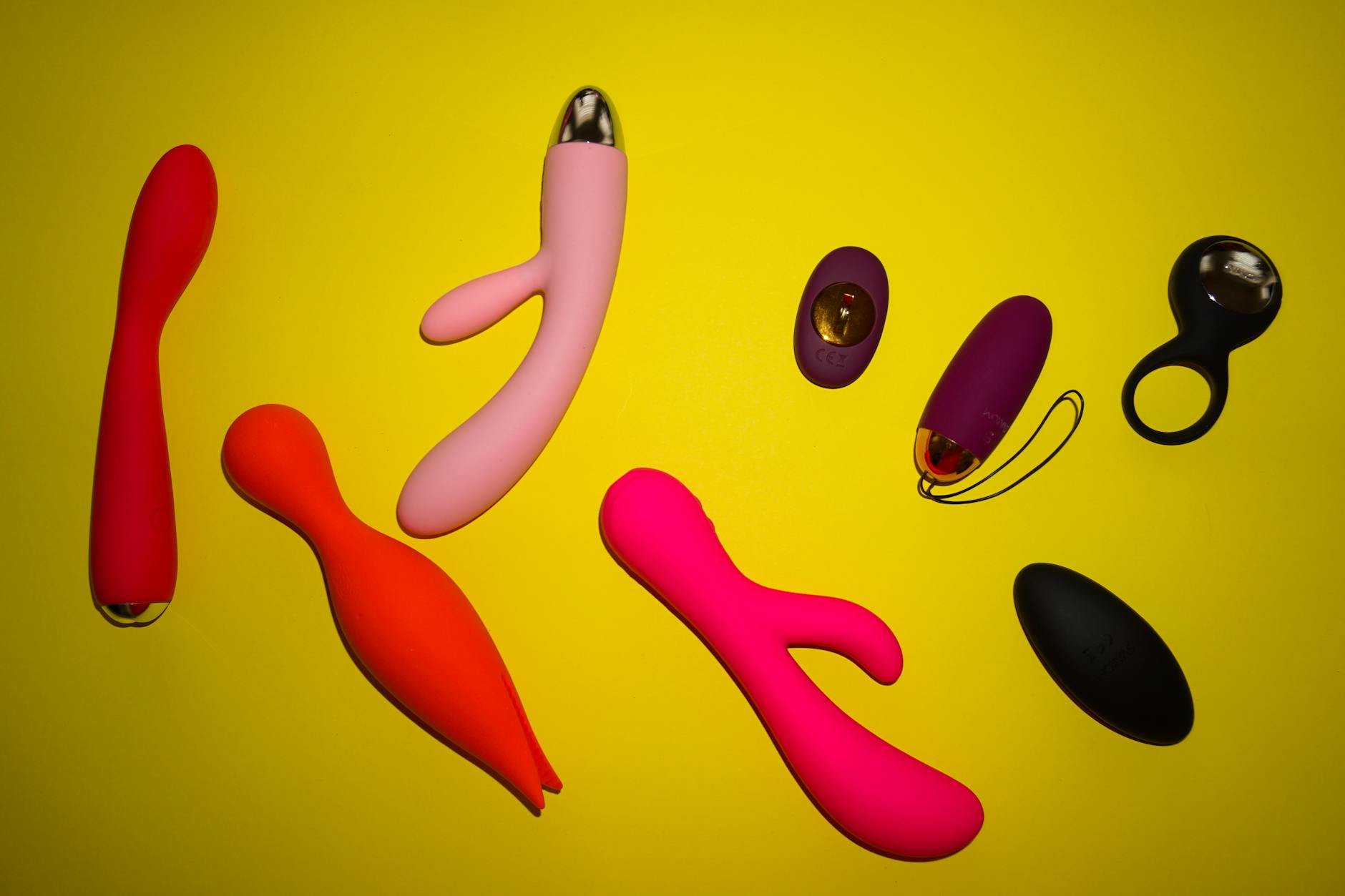
Photo by cottonbro studio on Pexels
The suction advantage for different preferences
This is where clitoral vibrators become the actual solution. Unlike standard vibrators that rely on speed and buzz intensity, lemon-shaped suction toys like the Lem work through gentle pressure and release. That changes everything for partners with different preferences.
Why? Because you can adjust intensity without fundamentally changing the sensation. On setting 1, suction feels like a soft kiss. By setting 5, it's deep and commanding. But the type of sensation stays constant. You're not switching from one kind of pleasure to another. You're scaling it.
For the partner who prefers gentler input, this means you can use the Lem on lower settings and actually get sustained pleasure instead of frustration that it's not strong enough. For the partner who wants intensity, you're not settling. Settings 7 and up on a quality lemon vibrator deliver legitimate sensation.
The key is starting together, not taking turns. When couples try toys separately, someone always ends up feeling left out or like this is something you do instead of together. Shared exploration changes that framing entirely.
How to actually use it when intensity needs differ
Four practical approaches that work with different pressure profiles.
Approach 1: Trade the controls. One partner uses the Lem on the other's body, which means one person controls intensity in real time. The receiving partner can guide ("a little stronger" or "stay here") without having to reach for controls. This is intimate and gives you immediate feedback on what's working. Start at setting 2 or 3. Move up in increments of one. Pause between changes so you both feel the difference.
Approach 2: Find the overlap setting. This is the setting where both partners feel genuine pleasure. It might be setting 4 or 5. Once you find it, spend 10 minutes there together. Use the Lem on the receiving partner while the other provides other touch. hand-holding, kissing, skin contact. Intensity matching isn't about both people needing the same stimulation. It's about both people feeling present in the same moment.
Approach 3: Sequential exploration. Start at the gentler partner's preferred intensity (maybe setting 2). Spend a few minutes there. Then ask if you can move up one setting. Stay there. Keep asking, keep moving incrementally. The partner who prefers stronger sensation gets to experience the build. The other partner doesn't get shocked into overwhelm. You move together, not separately.
Approach 4: External plus internal. One partner uses the Lem on the receiving partner's clitoris while the other partner provides internal stimulation (fingers, penis, or another toy). This distributes intensity across different sensations, so neither partner is chasing one single setting. The gentler partner feels satisfied by the combination. The one who needs more intensity gets it from layering sensation types.
When one partner needs much more intensity than the other
This is the real friction point. What if the gap is huge? One partner is happy at setting 2, the other wants setting 8.
First: that's normal. Nervous system sensitivity varies wildly, and it's completely unrelated to how much someone cares about sex or their partner.
Second: you have options that don't involve one person white-knuckling through boredom.
If the intensity gap is significant, consider separate device time within a partnered session. Meaning: you start together with the Lem at a middle setting (maybe 4 or 5). After 10 minutes, the partner who wants less continues with setting 3 or 4 while the other switches to a different device (or uses their fingers) at whatever intensity they actually need. You're still in the same room, still connected, but you're not forcing your nervous system to pretend it likes something it doesn't.
Alternatively, rotate sessions. Some nights prioritize the partner who prefers gentleness. Use the Lem at their preferred intensity and let the other person enjoy watching and touching. Other nights, flip it. The partner who usually wants more intensity gets their turn with the device at their setting while the other provides support and presence.
The hidden benefit: this teaches you both that pleasure isn't a single, negotiated experience. It's multiple experiences that matter to different bodies. That's actually way more intimate than forcing a compromise.
Communication patterns that matter more than the toy
Here's what I see in my practice: couples who solve the intensity problem successfully aren't the ones who have identical preferences. They're the ones who actually talk about what they want without shame or defensiveness.
When you ask your partner about intensity and they say "honestly, I like it pretty strong," and you hear that as "you're not enough," the conversation stops. You blame the toy instead of the mismatch. But if you hear it as "here's useful information about my body," suddenly you have something to work with.
The same applies if your partner says "I honestly prefer it really gentle." That's not boring. That's valuable data. Gentle preference often means your partner is sensitive, which can mean they're responsive and engaged even at lower settings. That's not less pleasure. It's different pleasure.
When you use the Lem (or any clitoral vibrator) together and intensity comes up, stay curious. "What would make this better for you right now?" lands differently than "Is this okay?" One invites specificity. The other invites reassurance, which is actually a deflection.
The intensity conversation extends beyond the toy
Once you've figured out lemon vibrator settings that work for both of you, you've actually mapped something much bigger. You've learned how each of your bodies responds to sensation. You've practiced asking for what you want. You've learned that your partner's preference isn't personal rejection. It's just their nervous system being their nervous system.
Take that skill set everywhere. Partner communication about intensity translates to pressure during touch, how long foreplay lasts, which kinds of contact feel good when. You're not just solving a vibrator problem. You're building a language for pleasure that works for both of you.
That language is the thing that actually lasts.
People also ask
Can two people with different intensity preferences use the same lemon vibrator?
Absolutely. What matters is that you're intentional about it. The Lem and similar lemon-shaped suction toys have adjustable settings specifically for this reason. Start at a middle setting that works for both of you, or take turns and let the person using it control intensity in the moment. The key is communication before, during, and after so you both know what you're aiming for.
What if my partner thinks I want too much intensity and it embarrasses them?
That's worth naming directly. Intensity preference isn't kinky or weird. It's physiology. Some nervous systems require more input to register pleasure. If your partner feels self-conscious, try reframing: "I'm not turned on by intensity instead of you. I'm turned on by getting to feel something strong." Separate the desire for sensation from your desire for them. They're not in competition.
Should we buy different vibrators if we want different intensities?
Not necessarily. A quality lemon clitoral vibrator with multiple settings usually covers the range for most couples. That said, if one partner consistently wants much gentler sensation and the other consistently wants maximum intensity, having a second toy might make sense. But try a single device first. You might surprise yourselves with what you can find together.
How do we talk about intensity without making it feel clinical?
You're already doing it if you're asking questions and listening. "Tell me what you want" is not clinical. It's intimate. You can ask playfully: "Okay, am I turning you up or turning you down?" while using the Lem. You can ask afterward: "What was that like for you?" Casual language, genuine interest. That's the opposite of clinical.
What if we find our preferred intensities and then they change?
They will. Stress, hormones, medication, emotional state, time of day, and a hundred other factors shift what intensity actually registers. That's not failure. That's why you check in regularly. "What are you in the mood for tonight?" is a question you ask every session, not once and you're done forever. Pleasure is dynamic.
Can lemon vibrators help if one partner has a sensitivity issue?
Yes. Clitoral vibrators with suction work well for people with sensitive tissue because you're not relying on direct buzzing friction. If one partner has tissue sensitivity and the other doesn't, the suction approach often feels gentler for the sensitive partner while still delivering sensation. You might start at lower settings and move up gradually, but the Lem's design actually helps bridge that specific gap.
The actual takeaway
Intensity mismatches aren't a problem to overcome. They're information. Information about how your bodies work, what you each need, and how willing you are to actually listen to each other. The lemon vibrator is just the tool. The real work is the conversation.
Get curious about each other's preferences. Ask without judgment. Listen without defensiveness. Then use the settings on the Lem to match what you learned. You might find that the intensity gap you thought was a dealbreaker is actually just a misunderstanding that took about five minutes to solve.
If you're looking to start this conversation with a tool that adapts to different bodies, the Lem is built for exactly this. But the device matters less than showing up honestly for each other.
Have the conversation first. The rest follows naturally.