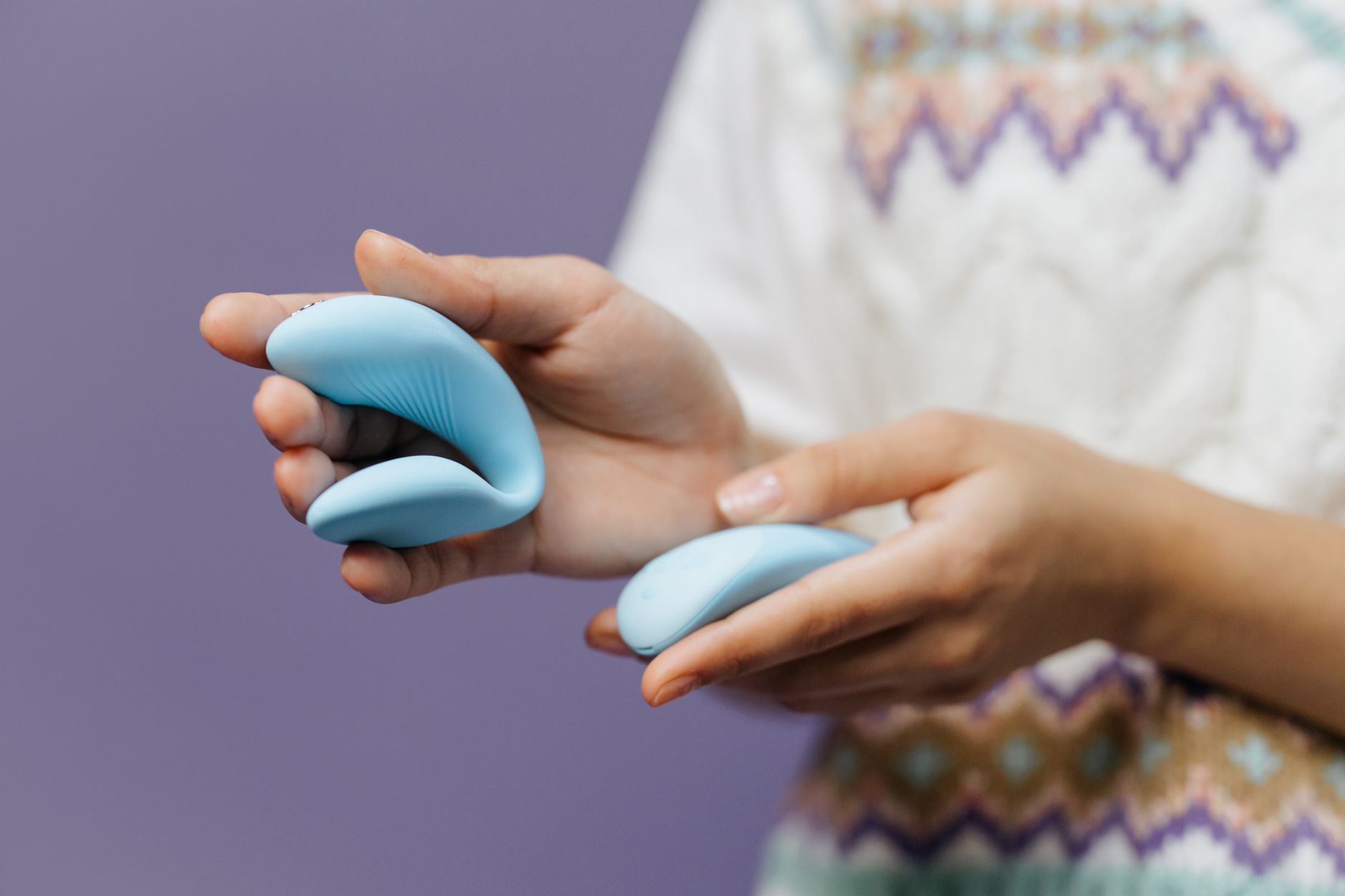
How to Use a Lemon Vibrator When Pleasure Feels Rushed or Performative
Here's the thing about performance pressure. It doesn't just live in the boardroom or the bedroom with a partner. It lives inside your own head, in the way you approach your body, in the voice that says you should be "done" by now or that pleasure is something to check off a list.
I see this all the time in my practice. People describe their solo time as if they're on a deadline. Efficient. Goal-oriented. The kind of sex that leaves them feeling empty because they never actually arrived. They were just running toward the finish line the whole time.
If that sounds familiar, a lemon sucker vibrator can actually help you rewire that relationship with your own body. Not because the tool is magic, but because it forces a conversation between you and your nervous system about what speed you actually want to move at.
Why pleasure can start to feel like performance
Performance pressure around sex usually has three roots. The first is external. Partners who rush, cultural messaging that positions pleasure as efficient, or the simple reality of time scarcity. You have 20 minutes before someone gets home. You squeeze in solo time like it's a workout.
The second is internal. Maybe you grew up hearing that pleasure was indulgent or shameful. Now you've "allowed" yourself to have it, but there's a voice underneath that says it shouldn't take too long. You shouldn't want it too much.
The third is neurological. Stress, anxiety, and burnout literally rewire how your body responds to stimulation. Your nervous system is in fight-or-flight mode. Your body can't slow down enough to feel much of anything. So you escalate. Faster vibration, more pressure, less sensation actually registering. The treadmill gets faster and the destination keeps moving.
The result is pleasure without presence. Which isn't really pleasure at all.
What a lemon vibrator teaches your nervous system
A lemon clitoral vibrator like the one from Hellanancy is designed around suction and gentle rhythm rather than aggressive vibration intensity. That design choice matters for exactly this reason. It creates a ceiling on how fast you can go.
You can't rush a suction-based clitoral vibrator in the way you can rush yourself into numbing with an old-school buzzing vibrator. The sensation is diffuse across the whole clitoral complex rather than concentrated on a single point. That means your nervous system actually has to register what's happening to feel it. You can't zone out. You can't white-knuckle through to an orgasm and call it a day.
This sounds like a limitation. It's actually a feature.
When you use a lemon vibrator, you're essentially saying to your nervous system, "We're going to slow down. We're going to feel this. We're not going to perform our way through it." The device does part of the work, yes. But your job is to stay present with the sensation, not to race toward a finish line.
Slowing down without guilt
The first step is giving yourself permission to take the time you actually need. This sounds obvious until you try it. Most people I work with struggle with this part more than the physical part.
Here's what I suggest. Set a boundary around time, but make it generous. Not five minutes. Not even 15. I recommend 30 to 45 minutes when you're starting to rewire this relationship with pleasure. Yes, that's longer than you think you need. That's exactly the point.
Spend the first ten minutes just touching your body. No vibrator. No agenda. Notice what feels warm, where you hold tension, which parts of your body want attention. This isn't foreplay in the traditional sense. It's you learning to be present before the intensity starts.
When you pick up the lemon vibrator, start at the lowest setting. Not because your body needs low intensity (it might not), but because you need to train yourself to notice subtle sensation. Most people skip this step because they're used to intensity being the shorthand for pleasure. But sensitivity and intensity are different things. A lemon clitoral vibrator helps you access both.
The rhythm of not rushing
One thing I notice is that people who feel rushed in pleasure usually have one speed: faster. They go from zero to intense and stay there until something happens or they give up.
With a suction-based vibrator, try a different pattern. Start low. Stay there for a few minutes. Your body will start to wake up. Then move to the next level, not because you're impatient, but because your nervous system has adjusted and is ready for something new. Hold that for a few minutes. The point isn't to reach the "best" setting as quickly as possible. The point is to spend time at each intensity and actually feel what's there.
You'll probably notice that the sensations are different at each level in ways you didn't expect. Maybe level two feels richer than level four. Maybe you want to drift between two and three for most of your time. Let that be okay. Your pleasure doesn't have to look like anyone else's or match your own usual pattern.
If you're using a lemon vibrator with a partner, this also helps. It signals to your partner that you're not trying to optimize for speed or intensity. You're optimizing for presence. That takes enormous pressure off both of you.
When performance anxiety meets your body
Sometimes the rush comes from a different place. You've internalized the idea that you should have an orgasm by a certain point. That there's a "normal" timeline. When you're not hitting that timeline, panic sets in. The panic makes you tense. The tension makes sensation harder. So you grip tighter, expecting faster results.
A lemon vibrator can help here too, but differently. Because suction-based stimulation tends to feel less like "working" and more like sustained sensation, your body can sometimes let go of the outcome-focused thinking. You're not waiting for something to happen. Something is already happening. Your nervous system gets a chance to just be in sensation instead of pursuing it.
If you notice yourself spiraling into "why isn't this working" thoughts, pause. Move your attention away from the vibrator for a moment. Notice your breathing. Feel your weight against the bed or chair. Let your nervous system know you're safe and there's no deadline.
Then come back to the sensation. Not to make something happen faster. Just to reconnect with what's already there.
Staying present when distraction is the default
Our brains are trained for distraction now. Your phone is three feet away. Your to-do list is running in the background. The idea of being present for 30 or 45 minutes without your mind wandering feels impossible.
It's not that you're bad at this. Your nervous system is primed to be somewhere else, doing something else. Presence is a skill you have to rebuild.
One technique that helps is anchoring. Pick something to pay attention to beyond just the sensation of the vibrator. The temperature of your skin. The way your breath feels moving in and out. The specific texture of the sheets under you. Your nervous system can track pleasure better when it's anchored to something concrete.
You can also use a mantra. Nothing spiritual or forced. Just something like "I'm here" or "This is mine" or "I deserve this time." Every time your mind wanders to your calendar or last week's conversation, bring it back to your anchor or your mantra. Again and again. This is literally rewiring how your brain handles pleasure.
When you're ready to try this with a partner
If your rush comes partly from partnered sex dynamics, introducing a lemon clitoral vibrator can actually shift the whole tempo. Because you're taking responsibility for your own sensation and your own timeline, your partner isn't in the position of having to "get you there" on their schedule.
Many couples find that when one person takes the pressure off by using a vibrator at their own pace, the other person relaxes too. The whole dynamic slows down. Communication gets better. There's less urgency and more exploration.
That said, this only works if you've actually done the internal work first. Using a vibrator while you're still in rush mode just transfers the performance pressure to a tool. When communication with your partner feels difficult, talking about what speed feels good and what doesn't is worth doing before you bring toys into it.
The cumulative effect of slowness
Here's what I tell people after a few weeks of using their lemon vibrator this way. The change isn't usually dramatic. It's not like pleasure suddenly becomes transcendent. But something shifts. You start to notice your body more. You have a different relationship with your own nervous system. You realize you can't actually be rushed if you don't agree to be rushed.
That understanding travels outside the bedroom. You start saying no to things faster because you remember what it feels like to honor your own timeline. You notice when you're operating in performance mode in other contexts too. Work, relationships, conversations. And you have a tool now for slowing down.
A lemon vibrator won't fix your relationship with productivity culture or your tendency to rush. But it gives your body a chance to remember what unhurried pleasure feels like. And that memory matters. That memory changes things.
Frequently Asked Questions
How do I know if I'm using my lemon vibrator correctly if I'm not having an orgasm?
Organisms aren't the measurement of whether you're doing this right. If you're present, if you're feeling sensation, if you're spending actual time with your body instead of rushing through it, you're doing it correctly. Some sessions will have an orgasm. Some won't. Both are valid. The lemon clitoral vibrator is working if you're slowing down and paying attention, period.
Can a lemon sucker vibrator help if I get bored easily with pleasure?
Often what feels like boredom is actually dissociation from rushing. When you slow down enough to actually feel nuance in sensation, boredom usually stops being the problem. But yes, you can also vary where you use the vibrator, what you're thinking about, what positions you're in. The point is to vary slowly and intentionally, not to chase novelty out of anxiety.
Why does my lemon vibrator feel less intense than my old vibrator?
Suction-based stimulation is genuinely different from vibrational intensity. It might feel less intense because it IS less intense in the buzzing sense. But it often feels more sensation-rich because it's spread across more area. If you find you need more intensity, that's fine. Increase the setting. The whole point is that you get to decide your own pace, not that any particular intensity is "right."
Is it okay to use my lemon vibrator when I'm feeling stressed and need a quick release?
Absolutely. The goal isn't to always take 45 minutes. The goal is to stop believing that rushed is the only option. If you have 10 minutes and you need to decompress, use your vibrator for 10 minutes. The shift is from "I have to rush" to "I'm choosing to be efficient right now." That's a different nervous system state entirely.
How do I explain slowness to a partner who wants quick sex?
You don't have to make your pleasure slow every time. But the time you spend on your own body isn't about accommodating your partner's preferences. It's about what your nervous system needs. You might say something like, "I'm learning what works for my body when I take time with it. That doesn't mean partnered sex always looks like this." Clear boundaries help. So does showing them what you've learned feels good.
Can I use my lemon vibrator while my mind is wandering to work stuff?
Technically yes, you can do anything while your mind is elsewhere. But if rush and performance are your patterns, continuing to zone out defeats the whole purpose. This is specifically about training your nervous system to stay present. If work thoughts keep intruding, that's information. Your nervous system isn't ready to slow down yet. That's okay. Try a shorter time window or a quieter space. The point is noticing what blocks presence and working with that, not just powering through it.
Reclaim your pleasure from the timeline
Performance pressure around pleasure is real. It's learned. And it can be unlearned. A lemon vibrator won't do that work for you. But it creates the conditions where your nervous system can remember what unhurried sensation actually feels like.
That memory is radical. That memory changes how you move through the world. Start there.