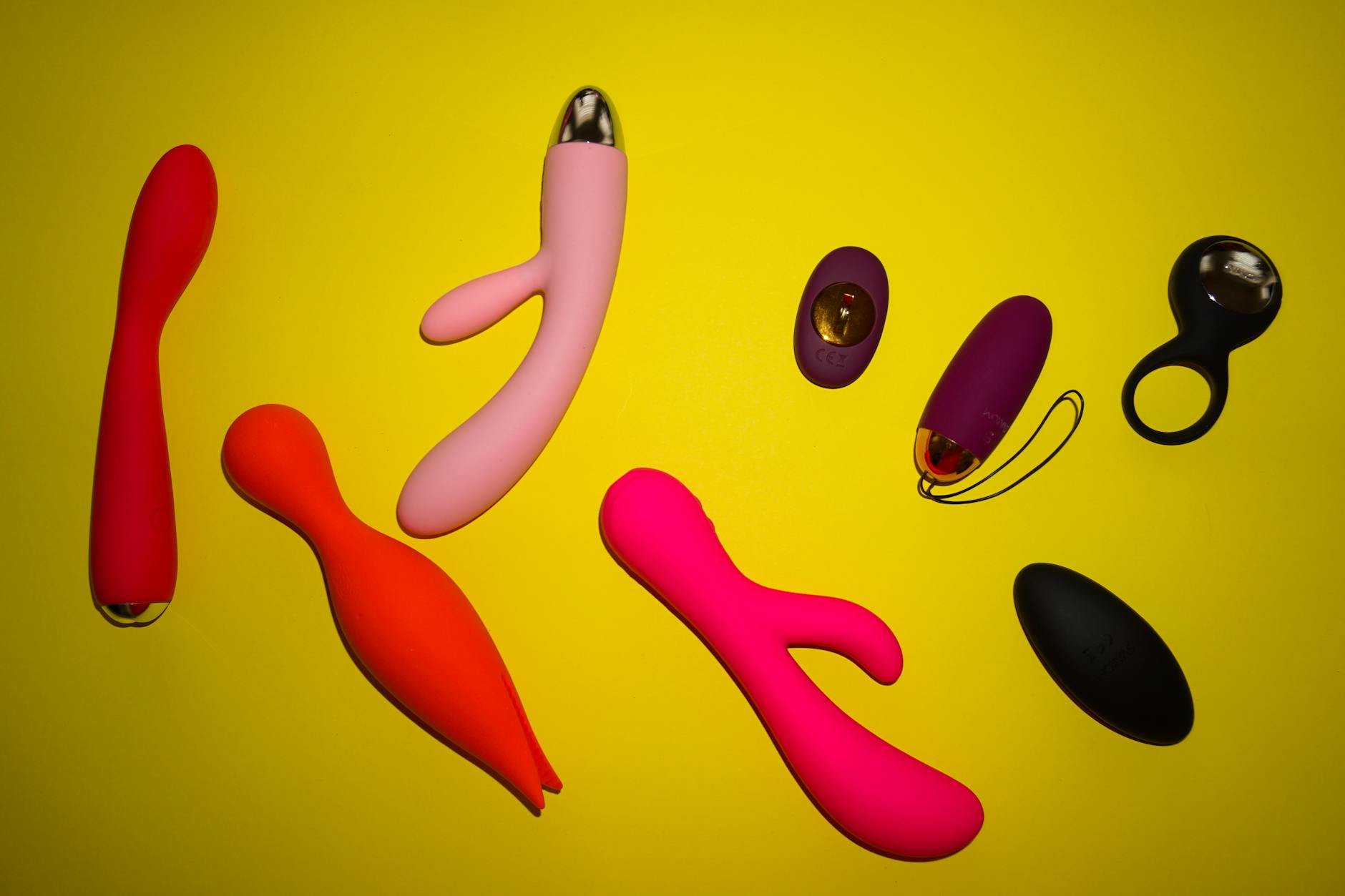
Let's name what you're actually feeling
It's not quite guilt. It's not quite wrong. It's that low-grade discomfort that lives somewhere between "I'm not supposed to want this" and "Everyone else probably doesn't do this." That's shame. And it's the single biggest blocker between you and satisfaction.
I work with people on relationships for a living. The number one thing I hear from women about solo pleasure isn't "I don't want it." It's "I feel weird about it." That feeling is not accidental. It's been taught to you, reinforced for years, and now it's wired into your nervous system. The good news? It can be rewired. And a tool like a lemon clitoral vibrator is often the fastest way to do it.
Where the shame actually comes from
You didn't wake up at age twelve feeling bad about pleasure. Someone taught you. Maybe directly: a parent's tone, a religious message, a friend's joke that stung. Maybe indirectly: noticing that boys' sexuality was celebrated while girls' was managed. That women who wanted pleasure were called certain names. That you should be modest, passive, available to others but not to yourself.
That messaging doesn't just sit in your conscious mind. It gets encoded in your body. When you touch yourself, some part of your nervous system flags it as wrong, dangerous, or shameful. Your brain tenses. Your pleasure gets interrupted. You can't relax into sensation because you're vigilant for judgment.
Here's the thing no one tells you: that discomfort isn't moral truth. It's conditioning. And conditioning changes.
Why shame blocks actual sensation
Physiologically, shame and pleasure live in totally different nervous system states. Pleasure requires parasympathetic activation: relaxation, safety, the sense that you're allowed to feel good. Shame activates the sympathetic system: fight, flight, vigilance. You literally cannot be in both states at the same time.
So when you try to pleasure yourself while carrying shame, your nervous system is split. Part of you is trying to feel good. The other part is on high alert: "Is someone going to know? Should I feel this? Am I doing this wrong?" That internal conflict kills arousal fast.
A lemon vibrator changes this because it externalizes the action. Instead of your hand doing something you've been taught feels bad, a device is doing it. That small shift in agency can quiet the shame just enough to let sensation through. Your nervous system gets a microsecond of permission. And in that permission, everything changes.
The permission phase (what happens first)
When you first use a lemon sexual toy, you might not feel a massive orgasm. You might feel relief. You might feel a little silly. You might feel weirdly emotional. All of these are normal because you're essentially giving yourself permission you've never fully had before.
The first few times, expect to feel some resistance. That's not failure. That's your nervous system recognizing that you're doing something your conditioning says you shouldn't. Stay with it. The resistance usually softens after two or three sessions because your body learns: this is safe. This is allowed. Nothing bad happens.
Many people tell me their first solo sessions with a clitoral vibrator feel less like sex and more like reclamation. You're not trying to reach an orgasm. You're learning to tolerate pleasure. That's the real work.
How to actually use a lemon vibrator when shame is present
Start with low pressure and low expectation. A lemon vibrator like the one from Hellanancy uses suction rather than vibration, which means gentler sensation. That matters because you're not trying to override your nervous system. You're trying to befriend it.
Set a time and place where you can be alone without interruption. Not rushed. Not squeezed between other things. Tell yourself: "I'm doing this for me. Not to perform. Not to achieve anything. Just to feel."
Begin with the device on lower settings. Touch your body first, build some baseline arousal. Let your mind wander. Notice where the shame shows up most. Is it in your chest? Your thoughts? Your legs? Just notice. You're not fighting it. You're mapping it.
Apply the lemon clitoral vibrator slowly. Many people expect it to feel incredible immediately. Sometimes it does. Often it feels mild at first because your nervous system is still in a light version of fight-or-flight. That's fine. Keep the intensity low. Breathe. The sensation will intensify as you relax.
If your mind gets loud with judgment, name it silently: "There's the shame. I feel it. I'm staying anyway." Don't try to think it away. Just witness it and keep your attention on the physical sensation.
If you don't orgasm in the first session, that's normal. You're rewiring years of conditioning. Satisfaction comes before orgasm in this process. Many women report that their first real pleasure comes in session three or four, not session one.
What changes when shame lifts
Once you've given yourself permission solo, something shifts in partnered sex too. You stop waiting for someone else to make sex happen. You know what your body wants. You can ask for it. You're not performing pleasure anymore. You're experiencing it.
I've had clients who couldn't orgasm with partners for years suddenly orgasm consistently after a few weeks of solo practice with a lemon vibrator. Not because the vibrator is magic. Because they stopped waiting for external permission and started giving it to themselves.
Pleasure is a skill. Like any skill, it improves with practice and diminishes with shame. When you remove the shame, the skill develops fast.
Lowkey, this is why so many women report that their sexual satisfaction improved in midlife. Not because their bodies got better. Because their tolerance for cultural BS got worse. They stopped caring what they were supposed to want and started paying attention to what they actually wanted. Shame can't survive that kind of clarity.
When shame runs deeper
If you've experienced sexual trauma, abuse, or significant religious conditioning, solo pleasure might activate more than just normal awkwardness. You might feel panic, dissociation, or intense discomfort that doesn't fade after a few sessions.
That's not a sign that you're broken or that a lemon vibrator isn't for you. It's a sign that working with a therapist would help. A therapist trained in trauma or sex-positive approaches can help you safely rewire your nervous system. Then a tool like a clitoral vibrator becomes something you can use from a place of actual choice rather than pushing through resistance.
There's no shame in needing support. Healing shame almost always requires witnessing from another safe person first.
The long game
What you're actually rewiring here is your relationship to your own body. You're learning that your pleasure matters. That it's allowed. That wanting it doesn't make you bad or selfish or broken. That your body is worth attention and care.
That rewiring doesn't happen in one session. It takes weeks, sometimes months. But it's some of the most important personal work you can do. Because once you know, at a cellular level, that you deserve pleasure, everything else gets easier. Asking for what you want in relationships. Setting boundaries. Taking up space. Believing you matter.
A lemon vibrator is just a tool. But it's a tool that says: "Your pleasure is real. Your body deserves attention. You are allowed to feel good." And sometimes that's the permission you've been waiting for someone else to give you.
FAQ
How do I know if what I'm feeling is shame or just discomfort?
Shame usually has a moral charge. You feel like you're doing something wrong, not just unfamiliar. Discomfort is neutral. It's the sensation of newness. Try this: when you feel the feeling, ask yourself "Am I worried someone will judge me for this?" If the answer is yes, it's shame. If you're just adjusting to a new sensation, it's discomfort. Both are valid. Shame needs more gentle attention.
Can a lemon vibrator actually rewire shame or is that overstated?
It depends on how deep the shame is. For most people, regular solo pleasure with a device genuinely does shift nervous system patterns. Your body learns: this is safe, this is allowed, nothing bad happens. That learning happens at a nervous system level, not just intellectually. For people with deep trauma, a vibrator alone won't be enough. You'll need therapy alongside it. But for everyday shame about solo pleasure, a tool like a lemon clitoral vibrator consistently rewires the experience.
What if I try using a vibrator and the shame doesn't go away?
Take the pressure off. You don't have to keep using it if it's not working. Try shorter sessions. Try going slower. Try using it in a different context. Some people find it easier to use a clitoral vibrator when they're also relaxed with a partner nearby, versus completely alone. There's no "right way." The goal is to gradually expand your nervous system's window of tolerance for pleasure. If the device isn't helping, see a therapist who specializes in sexual health. Sometimes shame needs to be processed, not just exposed.
Is it normal to feel emotional the first time I use a lemon vibrator solo?
Completely. You might cry, laugh, feel flooded with relief, or feel weirdly sad after an orgasm. All of that is your nervous system processing years of not allowing yourself this. Emotions that come up during or after pleasure are your body releasing what it's been holding. That's healing. Let it happen. Cry if you need to. It doesn't mean anything is wrong.
Will using a lemon vibrator make me less sensitive to partner touch?
No. If anything, people report the opposite. When you practice solo pleasure regularly, you become more in touch with your body's signals. You know what you like, what speed works, what pressure feels good. That knowledge makes partnered sex better because you can communicate it. A lemon vibrator is not a replacement for partner touch. It's a way to know yourself so deeply that partnered touch becomes more satisfying, not less.
How often should I use a lemon clitoral vibrator if I'm trying to overcome shame?
Start with once or twice a week, no pressure to orgasm. Consistency matters more than frequency. Your nervous system learns through repetition that this is safe. After a few weeks, many people naturally increase frequency because it feels good, not because they feel obligated. If you're using it every day and it still feels uncomfortable, slow down. The goal is pleasure, not performance.
Permission is the first step
You came to this article because some part of you wants to feel good and knows you're not. That desire is healthy. That wanting is normal. Everything you've been taught about shame around solo pleasure is negotiable. You get to rewrite those rules.
A lemon vibrator won't fix shame alone. But it's a powerful tool for signaling to your nervous system that your pleasure matters. Use it gently. Use it without expectation. Use it as an act of self-kindness, not self-discipline. Your body is waiting for you to give yourself permission. The rest will follow.
If you're ready to explore deeper patterns around pleasure and relationships, reach out to us. Or dive into how to rebuild pleasure after relationship stress with more context and nuance.