
When stress hijacks your arousal system
Let's be real. When you're under chronic stress, your body prioritizes survival over sensation. Your nervous system stays locked in a low-grade alert state, your cortisol runs high, and pleasure feels like something happening to someone else. You're not broken. You're just operating from a different part of your brain.
This disconnection is common, especially after periods of prolonged work pressure, relationship tension, caregiving demands, or major life uncertainty. Your body learned to contract and protect itself. Now that you want to feel pleasure again, that protective reflex is still running in the background, muffling signals from your clitoris and dampening the anticipation that used to feel automatic.
How chronic stress actually dampens pleasure
When your nervous system stays in a persistent stress state, several things happen neurologically. Your parasympathetic nervous system (the "rest and digest" branch that activates arousal) gets outcompeted by your sympathetic system (fight-or-flight). Blood flow redirects away from your genitals toward your muscles and core organs. Your brain literally doesn't have bandwidth to register subtle sensations.
At the same time, stress hormones suppress sex hormone production. Cortisol and adrenaline are powerful, and they hold the attention of your endocrine system. Your estrogen and dopamine levels dip. This is a real physiological shift, not a willpower problem.
Many of my clients describe the sensation as feeling "numb from the waist down" or "watching pleasure happen instead of experiencing it." That dissociation is your nervous system's way of protecting you from overwhelm. It's adaptive in the moment. It's just no longer serving you.
Why lemon vibrators work differently for stress-dampened bodies
A good lemon clitoral vibrator like the Lem operates in a different register than finger stimulation or penetration. The consistent, patterned suction and vibration creates a predictable sensory signal that your stressed nervous system can track and gradually trust.
Unlike variable touch, which requires your brain to interpret changing pressure and rhythm, a lemon vibrator's patterns are reliable. Your nervous system doesn't have to work as hard to decode the sensation. This allows you to move from hypervigilance into something closer to calm focus.
The suction mechanism also matters. It stimulates the clitoral nerve network without requiring the kind of direct friction that can feel too intense when you're already overwhelmed. You're creating sensation without adding pressure. For stress-numbed bodies, that's the sweet spot.
Building tolerance through micro-sessions
The temptation is to dive in and try to recapture old patterns. Instead, you'll get faster results with shorter, more frequent exposure. Start with five-minute sessions, three times a week. That's enough time for your nervous system to register sensation without the cognitive load of a longer session.
During those five minutes, all you're doing is turning on a lemon clitoral vibrator at the lowest setting and placing it against your clitoris. You're not trying to orgasm. You're not trying to feel arousal. You're just creating sensation and letting your nervous system catalog it as safe.
After two to three weeks of consistent micro-sessions, you'll notice the numbness beginning to lift. Not dramatically. Just a subtle shift from "I don't feel anything" to "I feel something, but it's distant" to "I'm noticing this." That progression is the whole game.
The grounding piece that most people skip
Using a lemon sexual toy while your nervous system is still partly in fight-or-flight mode works better when you anchor yourself in the present moment. Before you start, spend two minutes doing this simple practice:
Notice five things you can see. Four things you can touch or feel on your body. Three things you can hear. Two things you can smell. One thing you can taste. This sensory sweep is called the 5-4-3-2-1 technique, and it signals to your nervous system that you're safe and present.
Then turn on your lemon vibrator. The combination of grounding plus predictable stimulation makes it much easier for your body to register pleasure instead of defaulting back to protection mode. You're creating multiple channels of sensory input, which helps your brain stay present instead of drifting into dissociation.
Patience is the active ingredient here
Rebuilding pleasure after prolonged stress isn't fast. It's not supposed to be. Your nervous system spent months or years learning that contraction was necessary. You're asking it to gradually trust sensation again. That takes repetition and consistency, not intensity.
One common mistake is assuming that if five minutes at the lowest setting isn't "enough," you should turn it up or add time. That actually resets your progress. You'll trigger the protective response again. Instead, stay with what feels manageable until it feels boring, then make tiny incremental changes. Increase the session to seven minutes. Move to pattern 2. Add a second session per week.
If at any point you feel yourself shutting down or spacing out, stop. That's your nervous system telling you it's at capacity. Acknowledge the session as a win and try again tomorrow.
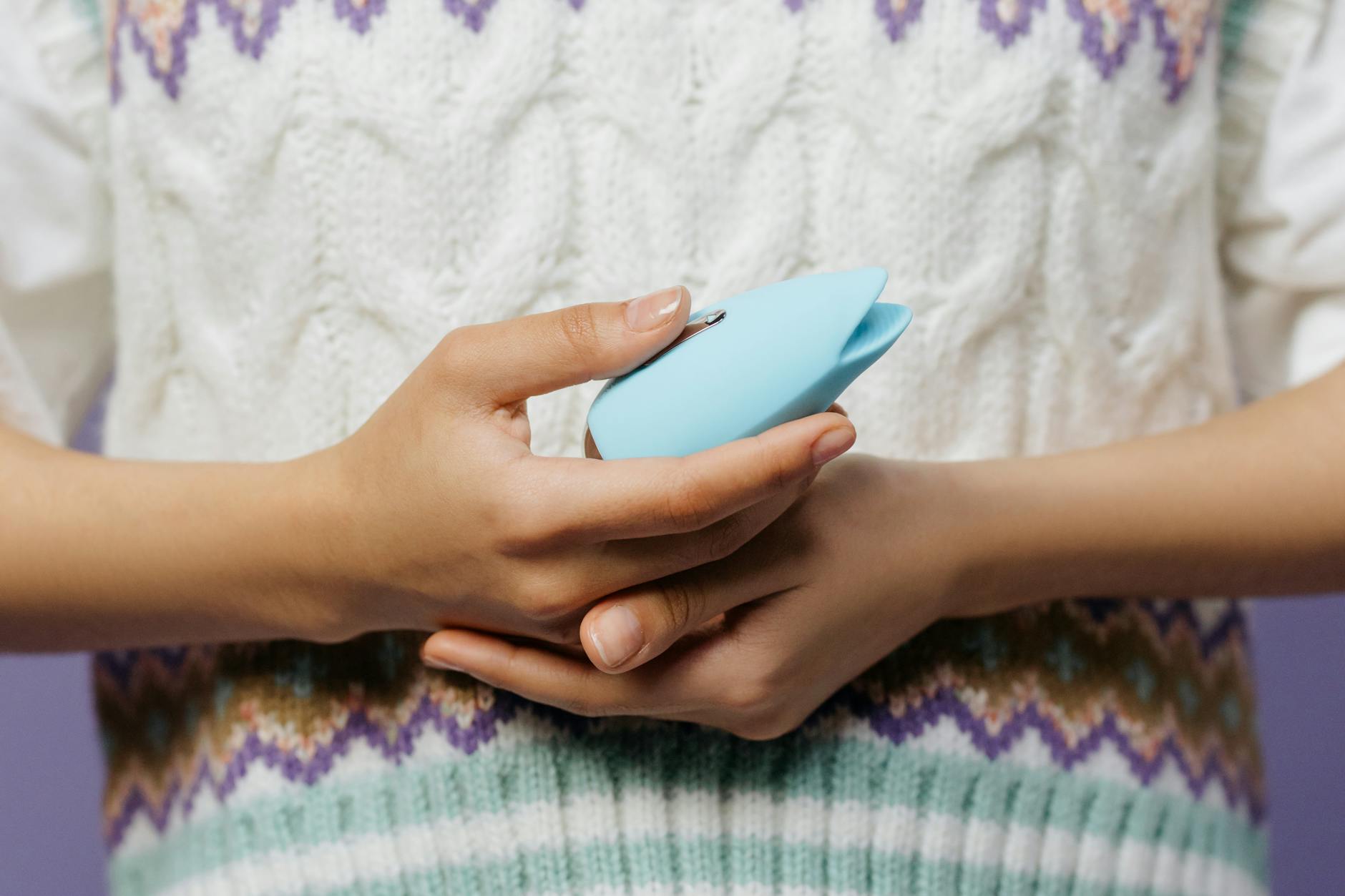
Photo by cottonbro studio on Pexels
When pleasure returns, expect it to feel different
One thing I emphasize with clients rebuilding after stress: the first orgasms you have might not feel like your old ones. They might be shallower, more localized, quieter. That's okay. That's actually a sign that your nervous system is cautiously re-engaging rather than forcing a response.
Over weeks and months, as your stress load decreases and your parasympathetic nervous system gets more activation, those orgasms will deepen and broaden. Your arousal will start to build faster. You'll feel the anticipation creeping back in.
But that evolution only happens if you're patient with the early, smaller sensations. Many people feel disappointed by early progress and abandon the whole process. The middle chapter of reconnection is quieter than you expect. That's not failure. That's healing.
What to do when stress flares up again
Life is not a smooth path. You might have a month of solid progress, then a work crisis hits, and suddenly you're numb again. This is normal. Your nervous system is just doing its job. You don't lose the progress you made. You just need to reset to micro-sessions for a week or two until your nervous system settles again.
Think of a lemon clitoral vibrator not as a tool that fixes the problem once and for all, but as a reliable way to signal to your body that pleasure is safe, even in a stressed season. Once you know how to use it as a nervous system reset, you have a resource you can return to anytime you need it.
The simplest path forward
Start small. Five minutes, lowest setting, grounded first. Do this three times a week for three weeks without expecting anything beyond sensation. Notice the smallest shifts. Adjust so gradually that change feels almost imperceptible.
This approach works because it stops fighting against your nervous system and starts working with it. You're not trying to override the stress response. You're giving your body consistent, safe evidence that pleasure is still available to you. That's how you rebuild disconnection. That's how you come home to your body again.
People also ask
How long does it take to feel pleasure again after chronic stress?
Most people notice a shift in sensation within two to three weeks of consistent micro-sessions. Full reconnection usually takes six to twelve weeks, depending on how long the stress lasted. This isn't a linear process. You'll have weeks of noticeable progress and weeks where nothing seems to change. Both are normal. The key is consistency, not intensity.
Can a lemon vibrator help if I'm still in a stressful situation?
Yes, absolutely. A lemon sucker can actually be a powerful tool for creating moments of parasympathetic activation even when your external circumstances are still demanding. The key is treating it as a dedicated nervous system reset, separate from whatever else is going on. Those five minutes are for your nervous system, not for productivity or outcomes. That boundary actually matters.
What if using a lemon sexual toy brings up anxiety or panic?
That's a sign your nervous system needs more grounding before you introduce the vibrator. Start with the 5-4-3-2-1 sensory technique for a full week before you add any device. If anxiety persists, consider talking with a therapist who specializes in trauma or nervous system work. Sometimes disconnection after stress has deeper roots worth exploring with professional support.
Should I use lube with a lemon clitoral vibrator when reconnecting to pleasure?
Water-based lube is always a good idea, even if you don't think you need it. When you're rebuilding sensation, lube removes friction that might feel irritating and allows you to focus purely on the vibration and suction. It also signals to your body that this is pleasurable touch, not clinical touch. That subtle cue matters.
What if I still feel numb after a month of trying?
If you've been consistent with micro-sessions and you're still not noticing any shift, two things are worth exploring. First, your stress load might still be too high. Your nervous system can't shift into pleasure mode if it's still managing acute stress. Second, there might be other factors at play. Medication, unprocessed trauma, or relationship dynamics can also dampen sensation. Consider talking with a healthcare provider or therapist to rule those out.
Can I combine a lemon vibrator with meditation or breathwork while reconnecting?
Yes, and it often accelerates the process. Slow, deep breathing activates your parasympathetic nervous system, which is exactly what you need. Try breathing in for a count of four, holding for four, exhaling for six. The longer exhale tells your nervous system you're safe. Combine this with your lemon vibrator session and you're giving your body multiple channels of permission to relax into sensation.
Getting back to yourself
Disconnection from pleasure after stress is one of the most common struggles I see in my practice, and it's also one of the most reversible. Your body hasn't forgotten how to feel. It just learned to protect you. The work is about gently, consistently showing your nervous system that sensation and safety can coexist.
A lemon vibrator is a tool for that conversation. So is patience. So is small, repeatable practice. Use them all together, and you'll find your way back to pleasure. Not to where you were before. To somewhere deeper.