
The problem nobody talks about
Foreplay isn't supposed to be a ten-minute warm-up before the main event. But somewhere between cultural scripts, porn logic, and the pressure to "get to it," that's exactly what it's become for most people. You start kissing. Things accelerate. Three minutes in, someone's hands are already moving toward penetration. And you're left thinking: wait, I wasn't even warmed up yet.
This happens to both partners, by the way. The person who feels rushed to move faster and the person who needed more time before things ramped up. Neither is wrong. They're just operating on different timelines.
Here's the thing: using a lemon vibrator during foreplay completely changes that dynamic. Not because it's a shortcut, but because it gives you control over the pace. You can slow everything down. Build arousal on your terms. Make foreplay feel like foreplay again instead of a pit stop.
Why foreplay actually needs time
Arousal isn't binary. It's not "off" until someone touches your genitals and suddenly you're "on." Real arousal builds across your whole body, starting in your brain before your body even catches up.
When things move too fast, your nervous system doesn't have time to shift from everyday mode into pleasure mode. Your clitoris needs 10 to 20 minutes of sustained stimulation before it's truly engorged and responsive. Your vulva needs time to naturally lubricate. Your mind needs to actually settle into sensation instead of running through your to-do list.
Rushed foreplay also teaches your body that pleasure comes second to the schedule. Over time, that trains you to deprioritize your own arousal. You might even start faking responsiveness just to move things along. And then suddenly you're not having orgasms, or they feel distant, and you think something's wrong with you. Nothing's wrong with you. You've just been trained to skip the part that makes pleasure real.
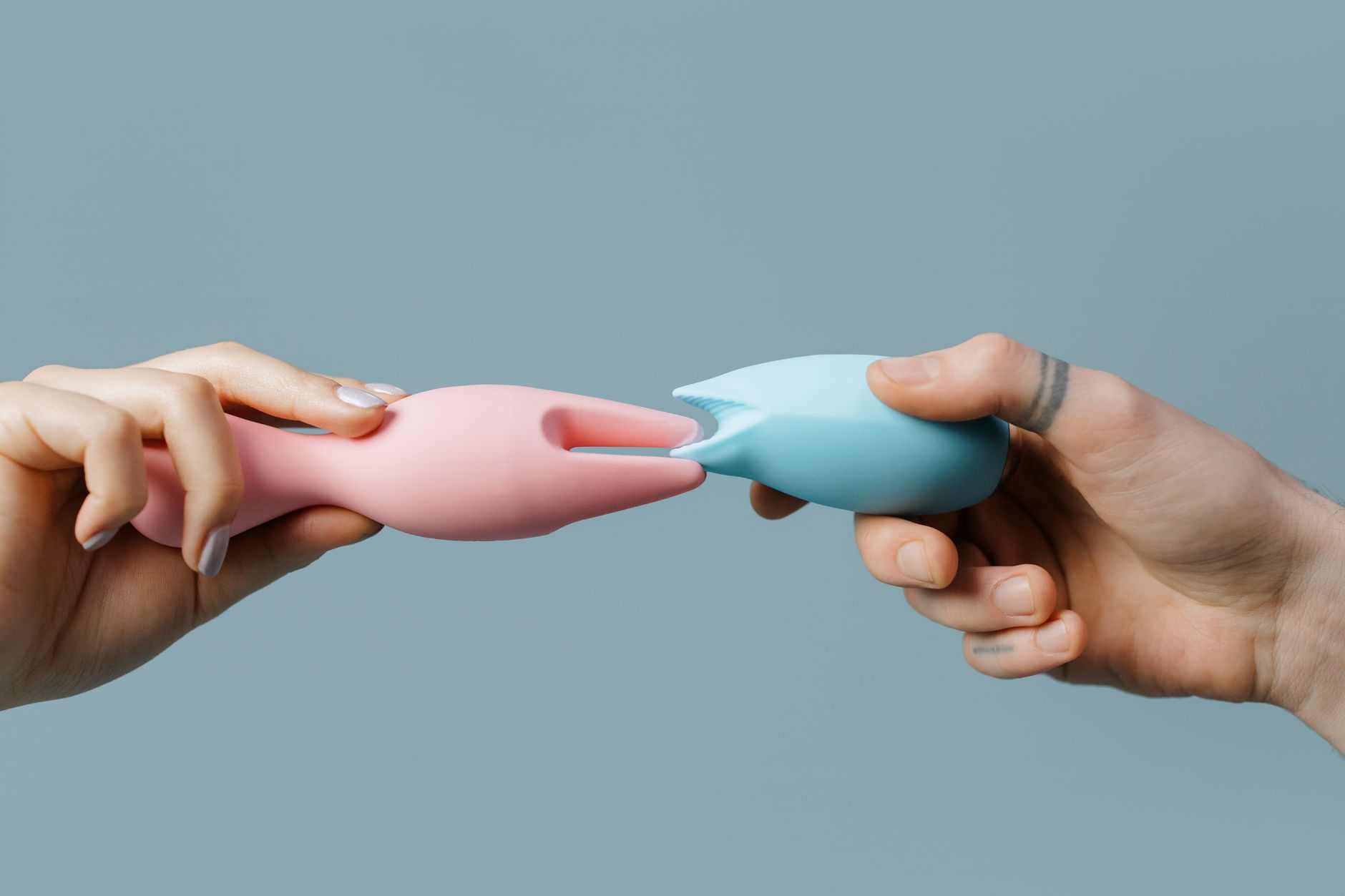 Photo by cottonbro studio on Pexels
How a lemon clitoral vibrator resets the timeline
When you introduce a lemon vibrator into foreplay, you're essentially saying: "This isn't a shortcut. This is how we slow down."
Here's why it works. A good clitoral vibrator like the Lem lets you do something neither you nor a partner's fingers can sustainably do: deliver consistent, precise stimulation for as long as you want. You're not asking for anything to speed up or slow down manually. You're just receiving. That alone releases some of the mental pressure.
Second, using a device redirects focus. Instead of "When do we move to the next thing," the question becomes "What does this sensation need." You get curious about patterns, intensity, angles. You build real arousal instead of performing arousal.
Third, it gives your partner something to do that isn't about penetration or hurrying. They can use their hands, mouth, or simply be present while you use the vibrator. That's foreplay. Real, sustained, mutual foreplay. Not a checklist item.
Setting up for slow, intentional foreplay
Timing is everything. Start your foreplay session before you're even touching genitals. Kissing, massage, skin-to-skin contact for at least 10 minutes. This isn't filler. This is when your body actually begins to respond.
When you do introduce the lemon vibrator, start on the lowest setting. Not because you can't handle more, but because slow stimulation lets you feel more. It lets your nervous system actually register sensation instead of just reacting to intensity. You'll notice when your clitoris starts to respond. You'll feel the shift from neutral to engaged.
Keep your eyes open if that's comfortable. Look at your partner. Talk. Not dirty talk necessarily, just check-ins. "This feels good." "Try a different angle." "Let's stay here longer." Foreplay that includes communication is foreplay that honors what's actually happening instead of what you think should happen.
The rhythm that actually builds arousal
Consistent, repetitive stimulation is how arousal compounds. Your nervous system likes knowing what to expect. A vibrator's steady rhythm is actually neurologically ideal for building sustained arousal. Use the same pattern, same intensity, for at least 5 to 10 minutes before you change anything.
If you're with a partner, they can continue touching other parts of your body while you or they operate the lemon vibrator. Your inner thighs, your breasts, your neck. The combination of targeted clitoral stimulation with diffuse touch elsewhere is deeply arousing. And it's not rushing you. It's giving you more sensory input, which deepens arousal.
When you do decide to change the intensity or pattern, make it deliberate. Move up to setting two or three. Stay there. Build again. This isn't about reaching peak arousal as fast as possible. It's about letting arousal compound across 20 to 30 minutes so that by the time you move to anything else, you're actually ready.
What changes when foreplay isn't rushed
Your orgasms will feel different. Deeper. Sometimes longer. Your ability to have multiple orgasms usually improves because your body actually recovers fully between them instead of rushing through to something else.
Your partner will probably feel less pressure too. If they know foreplay isn't a limited-time event, they can relax into it instead of anxiously moving forward. That changes the whole emotional tenor of the experience.
Most importantly, you'll stop apologizing for needing time. You'll stop feeling like your arousal is something to move past. You'll understand that slow foreplay isn't a luxury. It's literally how your body works best.
When your partner is impatient
This is the real friction point for a lot of people. You want to slow down. They want to speed up. A lemon vibrator actually gives you language for this conversation that isn't about blame.
"I want to use the Lem during foreplay" is different from "You're rushing me." One is about a tool that enhances things. The other sounds like criticism. You can frame it that way: "I want to build more arousal before we move on. This will help me get there." Most partners are fine with that. They might not have understood that you needed more time. But presented as a solution instead of a complaint, it usually lands.
If your partner is still resistant, that's worth a separate conversation. Not during sex. Afterwards, or another time entirely. Ask what they're worried about. Are they anxious about performance. Do they think slowing down means less pleasure for them. Sometimes people equate speed with passion, and slowing down feels like you're not into them. That's a misunderstanding worth clearing up on its own terms.
Meanwhile, you can use a lemon vibrator on your own to understand exactly what pace your body prefers. That clarity makes the conversation with a partner so much easier.
FAQ: slow foreplay and clitoral vibrators
Should I use lube with the Lem during foreplay?
Yes, always. Even if you're naturally lubricated, a small amount of water-based lube reduces friction and makes the sensation glide instead of stick. It also helps the vibrator glide across your whole vulva, not just in one spot.
How long should foreplay actually take?
There's no magic number, but 20 to 30 minutes is a solid baseline for building real arousal. Some people need more. Some need less. The point is you should feel genuinely ready, not just "ready enough to move on."
Can you use a lemon vibrator during foreplay with a partner, or is it just solo?
Both. You can use it solo to learn what you like, then introduce it with a partner. Or use it together from the start. Either works. Some couples use it together as a form of foreplay itself, which is genuinely intimate.
What if using a vibrator makes me feel less connected to my partner?
That usually means you're using it as a substitute rather than an addition. Try using it while they're still touching you, kissing you, talking to you. The device is for clitoral stimulation. Your partner is still there for everything else. Together, it's usually more connected, not less.
Does using a vibrator during foreplay mean you'll need it every time?
No. Once you've experienced what sustained, paced arousal feels like, your body often carries that forward. You might want the vibrator sometimes and not others. That's healthy variation, not dependency. You're just giving yourself options.
How do I know if I'm using the vibrator correctly for foreplay?
You should feel like arousal is building gradually over time, not spiking and plateauing. You should feel curiosity about sensation, not just chasing intensity. And you should lose track of time a bit. When foreplay is good, 20 minutes feels like five.
The permission you might need
Foreplay that takes time isn't indulgent. It's not something you do only on special occasions or when you have nowhere else to be. It's how your body actually works. Slow arousal produces better orgasms, more pleasure, and more connection. That's not a luxury. That's baseline.
Using a lemon vibrator during foreplay is one way to insist on that timeline without apologizing. You're not rushing yourself or your partner. You're taking the time your pleasure actually needs. That's it. That's the whole practice. And it changes everything.