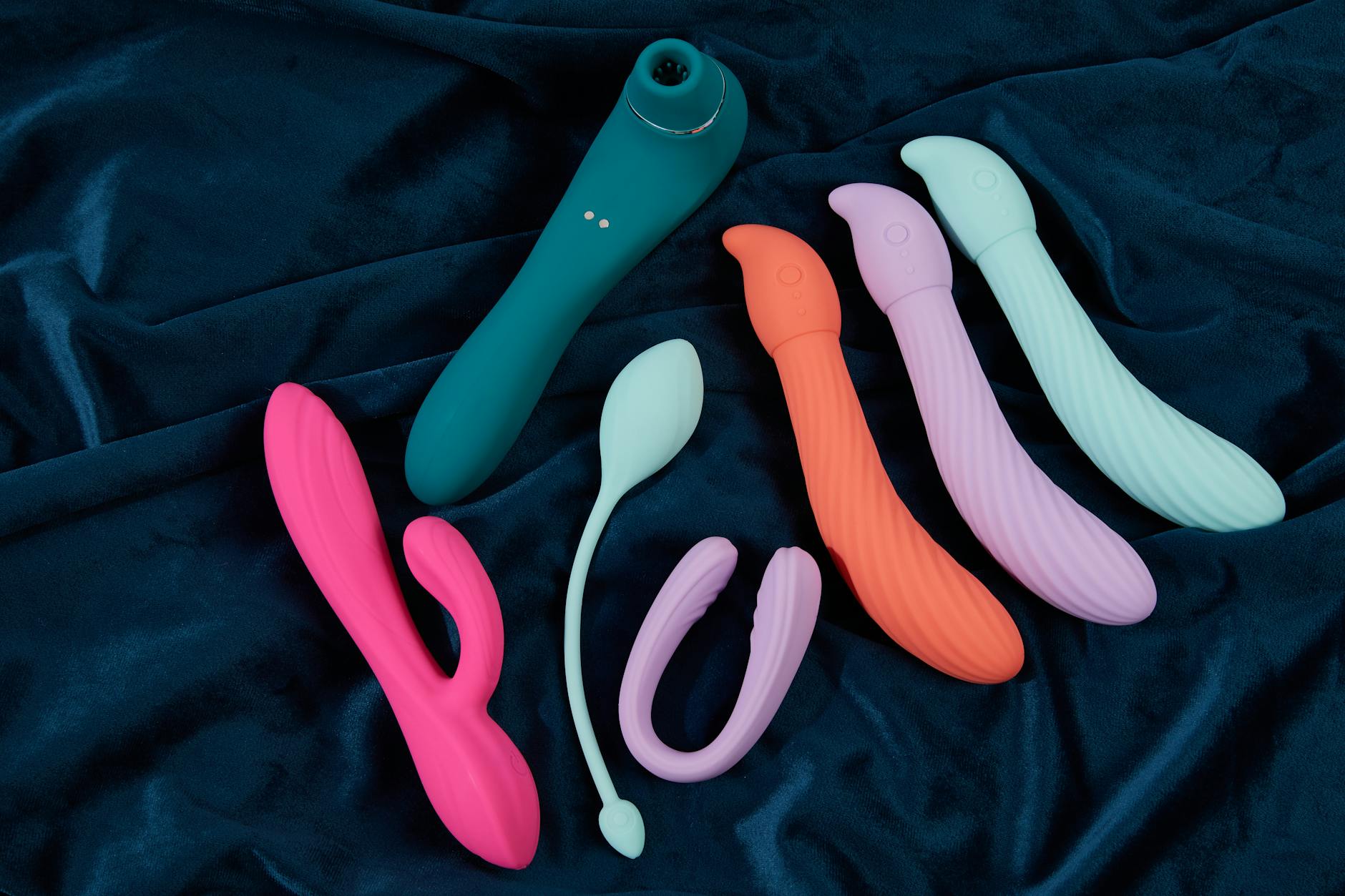
Let's be real about why this feels hard
You want to introduce a lemon vibrator. Maybe you've been using one alone for months. Maybe you just read that clitoral vibrators feel incredible and you're curious. Maybe your body changed and you need something different to reach orgasm with your partner. All of these are completely valid reasons. And yet: the thought of bringing it up makes your stomach tighten.
Here's what I hear from clients constantly: "I don't want him to think I'm not satisfied." Or: "I'm worried she'll feel replaced." Or: "What if they think I've been faking it?" These are real fears, and they're almost never about the vibrator. They're about vulnerability, about being seen wanting something specific, about the terror that your desire might somehow diminish the person you're with.
The good news is that introducing a lemon vibrator into partnered sex is one of the cleanest, fastest ways to rebuild sexual communication in a relationship. It forces honesty. It requires you to say what you want out loud. And it almost always leads somewhere better than where you started.
Why the timing and framing matter more than the toy
There's a difference between "I bought this vibrator because you're not good enough" and "I want to explore this together because your pleasure matters to me as much as mine does." Same toy. Completely different message. The framing is everything.
Pick a moment when you're both relaxed and clothed. Not in bed, not mid-argument, not after a drink. A Sunday morning coffee conversation, a walk, a car ride. Somewhere neutral where you can both think clearly and neither of you feels cornered.
The frame matters too. You're not confessing. You're not asking permission. You're inviting collaboration. "I've been thinking about exploring this together, and I'd like your input on how we could do it" is different from "I want to use this toy" (which sounds like a solo decision) or "Do you think it would be okay?" (which sounds like you need approval).
The conversation, word by word
Here's what I'd actually say, or something close to it:
"Hey, I want to talk about something that might feel awkward for a minute, but I promise it's good. I've been reading about lemon vibrators. Clitoral vibrators in general. And I'm really curious about how they feel, especially with you. Not instead of you. With you. Because I think it could make things even better for both of us, and I want to explore that."
Then stop. Let them talk. Don't fill the silence with apologies or explanations. The worst thing you can do is over-explain, which reads as defensive.
If they say "Tell me more," you can add: "I know my body pretty well by now, and I know what gets me there faster. Using a vibrator together isn't about you not being enough. It's about me knowing what I need and trusting you enough to ask for it."
If they seem hesitant, the conversation is: "What are you worried about?" Not "You should be fine with this." Actual curiosity about their concern. Because sometimes the hesitation isn't about jealousy or inadequacy. Sometimes it's about not knowing what it means or how it will feel or whether they'll know what to do.
What actually happens in bed
The logistics matter because they make the difference between awkward and arousing.
The night you try it, start without the toy. Build arousal the way you normally do. When you're both close, introduce it. Some partners love holding it. Some prefer you to hold it and they focus on penetration or kissing or whatever else. Some want you to use it while they use their hands. There's no one way.
The lemon vibrator is intuitive because the stimulation is concentrated and relatively gentle. You control the intensity. You control where it goes. If you're the one holding it, you can focus on exactly what feels good. If your partner is holding it, they get to participate in your pleasure in a new way, which most partners find genuinely hot.
The first time, keep it simple. Turn it on, feel what the different patterns do, focus on sensation rather than performance. This is exploration, not a test.
The thing nobody talks about: what changes
Using a lemon vibrator with a partner changes something small but real about the relationship. You've just asked for exactly what you want and your partner has said yes. That's an intimacy upgrade, not a threat.
Many couples find that introducing a clitoral vibrator actually improves communication in other areas. You've proven you can ask for something specific without the relationship ending. You've shown that vulnerability is safe. That's the foundation everything else builds on.
Some partners become obsessed with the toy themselves. I've had clients whose husbands or wives say something like, "I love making you come that hard. Can we use it again tomorrow?" The shift from anxiety to collaboration is real, and it's fast.
If your partner says no
If they're genuinely not interested, you have data. And you get to decide what to do with it.
A no could mean: "I need time to warm up to the idea." That's negotiable. "I'm insecure about it." That's a conversation about what insecurity is actually present. "I don't want anything in our sex life to change." That's a value difference that might matter more than the vibrator itself.
But here's what a no doesn't mean: you're asking too much. Your desire is wrong. You should be satisfied with less. The Lem vibrator exists because people want more from their bodies and their partnerships. Wanting that isn't selfish. It's honest.
If after a real conversation your partner still says no, you get to use it alone. Your pleasure doesn't require permission. Partnership means you respect each other's boundaries, not that you give up wanting things.
The deeper thing: why this matters
When you use a lemon clitoral vibrator with your partner, you're not adding a toy. You're adding trust. You're saying: I want to feel everything. I want you to help me get there. I trust you enough to show you exactly what I need.
That's the part that changes everything. Not the vibrator. The permission you're giving yourself to want something specific and ask for it directly.
I work with couples who have had the same sex for fifteen years, and introducing a clitoral vibrator is what finally cracks open real conversation about pleasure. Not because toys are magic. Because asking for a toy requires you to say what you want out loud, and that's the beginning of everything else.
FAQ: What people actually ask me
How do I bring this up if we've never talked about toys before?
Start smaller. "I read something interesting about how our bodies respond to different kinds of stimulation" opens the door without ambush. You're not asking for permission. You're introducing an idea as information first, then circling back to curiosity: "Have you ever thought about trying something like that?"
What if my partner thinks it means I'm not attracted to them anymore?
That fear is understandable but usually wrong. A clitoral vibrator doesn't replace a partner. It replaces hand fatigue, or friction that feels too intense, or the gap between how your body responds alone versus with someone else. You can say that directly: "I want to feel everything with you. This helps me get there faster, which means more time for us to be together."
Can we use a lemon vibrator if we're doing penetrative sex too?
Yes. That's actually when many people prefer it. Some partners use the vibrator while inside you. Some use it while you're being stimulated elsewhere. Some save it for before or after. The lemon vibrator's compact design means it doesn't get in the way the way some wands do. The suction sensation feels amazing alongside penetration because it's concentrated on the clitoris, which most wands don't do as effectively.
What if he wants to use it on me but I don't know if he'll do it right?
Guide him. "Slower here, a little more to the left, harder." You know your body. He's probably relieved to have actual direction instead of guessing. Most partners want to make their person feel good. They just don't have a map. You're providing one.
Is it normal to orgasm faster with a vibrator than without one?
Completely normal. The lemon clitoral vibrator stimulates nerves more efficiently than hands or penetration alone. Faster doesn't mean better, it just means your body is responding to precise stimulation. Some people like the speed. Some prefer to use the vibrator at lower intensities to stretch things out. You get to choose.
What if I want to use it but my partner has a low libido?
Use it alone, or in foreplay before they're fully engaged. The vibrator doesn't require your partner to be in the mood. You can get to orgasm in five minutes, then move into whatever else you both want. It can actually be the fastest way to sync up when one person is more interested than the other.
The conversation after the conversation
Once you've introduced the vibrator and used it together, you don't need to make a big deal of it every time. It becomes part of your toolkit, like changing position or trying a new location. But you might notice that you're more comfortable asking for other things too. Not just sexually. Just asking.
That's the real gift of bringing a lemon vibrator into partnered sex. You've proved that wanting something specific doesn't threaten the relationship. It strengthens it. You've shown your partner what you enjoy. You've asked them to participate. And you've both gotten to experience something better as a result.
If you're still nervous about how to start this conversation, the team at Hello Nancy has written other guides on communication and pleasure that might help. You could also check out the resource on lemon vibrators themselves if you want more technical information before the talk.
The conversation is the hard part. The toy is easy. And after you've had it once, every conversation that comes after gets a little easier too.