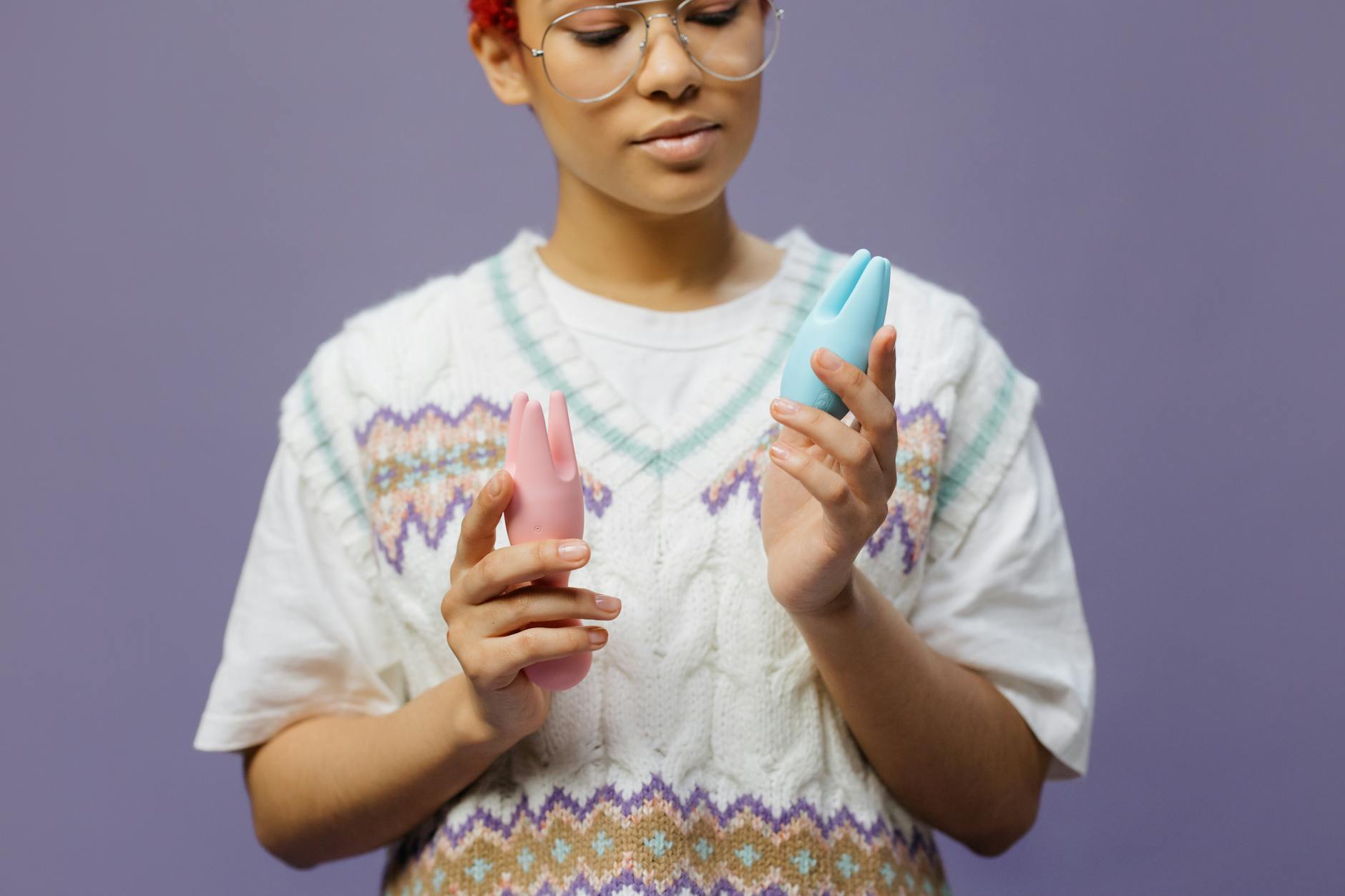
Here's the thing about sensitive skin and pleasure
Your skin is reacting to protect you. That's its job. But it doesn't have to be the reason you skip pleasure. If you've got eczema, contact dermatitis, psoriasis, or just skin that throws a fit whenever you introduce something new, using a lemon vibrator safely is entirely doable. It just requires a different approach than someone without reactive skin.
The good news. Material matters far more than brand. The lemon vibrator's suction-based design actually works better for sensitive skin than traditional vibration toys, because it creates less friction and irritation on delicate tissue.
Why lemon vibrators work with sensitive skin
A lemon clitoral vibrator like the Lem uses air-suction technology instead of direct vibration. This is a game-changer for reactive skin because it means less prolonged rubbing, less heat buildup, and less direct abrasion on already compromised tissue.
Traditional vibrators use direct vibration, which can heat up and create friction that irritates sensitive skin over time. You're essentially micro-abrading an already reactive area. A lemon sucker distributes stimulation differently. The suction pulls gently rather than buzzing against the skin, which reduces inflammation risk.
That said, not all toy materials are created equal. Silicone is the gold standard for sensitive skin, but there's silicone and then there's silicone. Medical-grade silicone (used in Hellanancy toys) is non-porous, doesn't absorb bacteria, and won't leach chemicals into your skin. Cheaper silicone, rubber blends, or jelly materials can contain fillers and phthalates that absolutely will trigger a reaction.
Material safety for sensitive skin
Before you buy anything, know what you're putting on your body.
Medical-grade silicone. This is what lemon vibrators are made from. It's hypoallergenic, non-porous, and won't react with lubrication. If you have a silicone allergy (rare but real), this won't help, but for most reactive-skin people, silicone is the safest bet.
Avoid these entirely: rubber, PVC, jelly, TPE (thermoplastic elastomer), and anything marketed generically as "plastic" or that has a chemical smell out of the box. These often contain phthalates or other plasticizers that migrate onto your skin. Even if they don't cause an immediate rash, they can accumulate irritation over time.
Check the source. Hellanancy toys are made from body-safe silicone. If you're buying elsewhere, manufacturers should be transparent about materials. If they're not, assume the worst.
Testing a lemon vibrator when you have sensitive skin
Don't jump straight to full use. Patch-test first.
Take your cleaned toy (more on cleaning below), apply a tiny amount of your regular lube to a small section, and hold it against your skin for five minutes. Not on your vulva. On your inner arm or behind your ear. These areas are also sensitive and will show a reaction faster if one's coming.
Wait 24 hours. If there's no redness, swelling, or itching, you're probably safe to proceed. If you see any reaction, stop here and consider whether it's the toy material or the lube triggering it. Try again with a different lube and the same toy, or vice versa.
Once you've confirmed the toy itself is safe, you can move to using it as intended. But keep that patch-test mindset. Start with the lowest suction setting, shortest session (five minutes max), and watch your skin's response over the next few hours.
Lubrication and sensitive skin
Here's what most people miss: the toy isn't always the culprit. The lube is.
Water-based lubes are essential with silicone toys (silicone lube degrades silicone). But not all water-based lubes are created equal. Many contain glycerin, parabens, or fragrance that'll absolutely ignite sensitive skin.
If you have reactive skin, use lubes specifically formulated for sensitive skin. Brands like Hyalo Gyn or Purpose-made intimate lubes exist exactly for this reason. They're glycerin-free, paraben-free, and fragrance-free. They cost a bit more. Worth it.
Better yet, do a patch test with the lube on its own first. Apply a small amount to your inner arm and wait 24 hours. This eliminates half the variables before you even touch the toy.
Cleaning your lemon vibrator properly
Proper cleaning isn't just hygiene. For sensitive skin, it's the difference between a safe experience and a flare-up.
After every use, wash with warm water and a tiny bit of unscented soap. Don't use the same soap you wash your body with unless it's specifically labeled hypoallergenic and fragrance-free. Consider keeping a separate bottle of gentle soap just for toys.
Dry completely with a clean, lint-free cloth. Moisture left on the toy can harbor bacteria or create conditions for fungal overgrowth, both of which trigger irritation and rashes.
Store in a clean, dry place. Not in a drawer with other toys (cross-contamination), not in a humid bathroom cabinet (mold risk). A dedicated small box or pouch works fine.
Deep clean monthly. Boil your silicone toy for five minutes, or run it through a dishwasher on the top rack. Yes, really. Silicone can handle heat and water. This kills anything that's accumulated over time.
Recognizing a real reaction vs. normal adjustment
Your body might feel different when you first use a lemon vibrator. That's not necessarily a reaction.
Normal responses include slight redness that fades in 30 minutes, mild tingling or pressure sensation (suction is different from vibration), or feeling "plumped" from increased blood flow. These pass.
A real reaction includes itching that doesn't stop, hives, swelling that grows rather than shrinks, burning sensation that gets worse, or a rash that develops over hours. If any of these happen, stop using the toy immediately and wash the area thoroughly with cool water.
If the reaction persists for more than a few hours or spreads, see a dermatologist. Bring the toy (cleaned) so they can assess whether it's a material sensitivity or something else entirely.
Using a lemon clitoral vibrator with existing skin conditions
If you already have eczema, psoriasis, or dermatitis, you need an even more careful approach.
Don't use a lemon vibrator during a flare-up. Wait until your skin has calmed down and is stable. Using it when your barrier is already compromised is asking for trouble.
When you do use it, keep sessions short (five to ten minutes max) and infrequent at first. Once a week, observe how your skin responds. Gradually increase frequency only if you're not seeing any irritation.
If you're on a topical steroid for dermatitis, check with your dermatologist before introducing a toy. Some steroids thin the skin, which means it's more reactive. Timing matters.
Keep a simple journal. Date, time, duration, how your skin felt before and after, any redness or irritation. Over time you'll identify patterns. Maybe your skin tolerates the lem vibrator fine on days when you're well-hydrated but reacts when you're stressed. That's useful information.
When to skip lemon vibrators altogether
There are situations where sensitive skin + toy use genuinely isn't the right call. Respect that.
If you have an active infection (yeast, bacterial, HSV outbreak), don't use any toy. Wait until you're treated and cleared by a provider.
If you're on medications that compromise your immune system or skin barrier, talk to your provider first. Some conditions make you too vulnerable to introduce new elements.
If you've had a severe allergic reaction to a toy in the past, consider whether the material was the issue or whether toys just aren't your thing. You don't need a toy to have pleasure. Some people use their hands, partners, or nothing at all. Pressure to use something that doesn't work for your body is the opposite of what sex should be.
Sensitive skin is a valid experience. So is pleasure. You're allowed to have both.
FAQ about lemon vibrators and sensitive skin
Can I use a lemon vibrator if I have a silicone allergy?
True silicone allergy is extremely rare, but it exists. If you've had reactions to silicone medical devices (breast implants, catheters, etc.), you'll want to avoid silicone toys. In that case, you're looking at a very short list of body-safe options. Talk to an allergist first to confirm it's silicone and not something else. If it is, your best bet is exploring non-penetrative pleasure or asking a provider about alternatives.
Is a water-based lube enough, or do I need something special?
Not all water-based lubes are equal. Standard drugstore options often contain glycerin or parabens, which can irritate sensitive skin. For reactive skin, you need a lube specifically formulated for sensitivity. It's worth the extra few pounds. Spend that money.
How often can I safely use a lemon vibrator if my skin is reactive?
Start once a week and observe. If your skin stays calm, you can try twice a week after a few weeks. Everyone's sensitivity is different. Some people can use toys daily without issue. Others need longer recovery time between sessions. Let your skin tell you what it needs.
What if I react to the toy but not the lube, or vice versa?
You've identified the culprit. If it's the lube, switch to a sensitivity-formulated brand. If it's the toy material, you'll need to explore other options or accept that this particular toy isn't compatible with your skin. Not every toy works for every body. That's okay.
Can sensitive skin improve over time, or am I stuck with this forever?
Skin can improve with proper care, but "sensitive" usually means your skin is wired that way. You're not going to make it disappear. What you can do is learn what triggers it and build a practice around that knowledge. That's actually more sustainable than hoping it goes away.
Should I be worried about infection if I use a lemon vibrator?
Not if you clean it properly and use good lube. Silicone is non-porous and won't harbor bacteria the way some other materials do. Clean after every use, dry thoroughly, store in a clean place, and you're fine. The risk of infection is the same as any other toy or partner contact.
Moving forward with pleasure and protection
Sensitive skin doesn't mean you don't deserve pleasure. It means you get to be intentional about how you create it. You'll patch-test, you'll choose materials carefully, and you'll listen to your body. That's not a limitation. That's self-knowledge.
If you're ready to explore, start with understanding what makes a lemon clitoral vibrator different in the first place. If you're still uncertain whether a toy is right for you, especially with reactive skin in the picture, reach out to our team. We're here to help you figure out what works for your specific body and situation.