Let's start with the thing nobody talks about
Your clitoris is hypersensitive. Not in the way pop culture frames it, and definitely not as a personal flaw. Some bodies have nerve density that makes direct touch feel sharp, overstimulating, or even painful. A vibrator that works brilliantly for your friend might feel like holding a dental drill against your skin.
That's where a lemon vibrator changes the game. A lemon clitoral vibrator uses air-suction technology instead of direct vibration, which means the sensation is gentler, more diffuse, and completely different from what you've probably tried before.
Why lemon vibrators work for sensitive clitorises
Most traditional vibrators buzz directly against tissue. Air-suction creates a gentle pulse or wave of pressure that builds around the entire clitoral head, rather than hammering at one spot. Think of it like the difference between a firm handshake and a gentle squeeze.
The lemon clitoral vibrator (often called a lemon sucker or lem vibrator) does this through a small silicone opening that fits over your clitoris and creates rhythmic suction. When you hit intensity level 1 or 2 on a device like the Lem, most people with sensitive clitorises experience relief rather than overwhelm.
Here's what makes this technology valuable for reactive bodies:
It spreads stimulation across a wider area. Direct vibration is concentrated. Suction is diffuse. If your clitoris feels too exposed or reactive, a lemon vibrator lets you experience pleasure without that pinpointed intensity.
The sensation is rhythmic rather than relentless. You get a pulse, a release, a pulse. It mimics the way oral sex actually feels, which most bodies recognize and respond to quickly.
You can control intensity without losing the sensation. On a traditional vibrator, dialing back power sometimes means the vibration disappears entirely. A lemon clitoral vibrator maintains the sensation at lower levels.
The physiology of clitoral sensitivity
Your clitoris contains roughly 8,000 nerve endings packed into a tiny area. For some people, that density is a superpower. For others, it means sensory overload kicks in fast.
This isn't about pain disorders or dysfunction. It's about nerve concentration and how your particular nervous system processes stimulation. Some people have clitorises that feel most pleasure through sustained, broad pressure. Others need light, rhythmic input. Still others find direct vibration intolerable but respond beautifully to suction.
A lemon vibrator accommodates that third group. If you've spent years thinking you just "weren't a vibrator person," you might have simply been trying the wrong technology.
When direct touch becomes uncomfortable
Three scenarios come up repeatedly in conversations with people who find traditional vibrators overwhelming:
After clitoral stimulation, the area becomes too raw to touch. This is called post-stimulation sensitivity. Your clitoris, once aroused, becomes almost tender. A lemon clitoral vibrator tends to resolve this faster because it doesn't create friction or sustained pressure. Many people can continue using one throughout their session without needing to stop and start.
Penetration-focused pleasure leaves your clitoris understimulated but oversensitive. Your partner is focused below, your clitoris is reactive but not getting the right kind of input, and a buzzing vibrator feels like the wrong tool. A lemon sucker provides the sustained, gentle rhythm that works in tandem with penetration without becoming aggressive.
You have a history of sexual pain or touch trauma. A direct vibrator can feel aggressive or triggering. Air-suction is gentler on a nervous system that's learned to brace. You get pleasure without the involuntary flinch.
How to use a lemon clitoral vibrator when you have a sensitive clitoris
Start with patience, not performance. Here's what works:
Begin at the lowest intensity. Most lemon clitoral vibrators have 10-15 patterns and multiple intensity levels. Start at level 1, pattern 1. You're testing how your body responds, not trying to reach an orgasm immediately.
Position matters more than pressure. The opening of a lemon vibrator should fit comfortably over your clitoris without forcing or stretching. If the seal doesn't feel natural, you're working too hard. Adjust angle and position until it feels like the device is finding you, not the other way around.
Use lubrication even though there's no penetration. A tiny bit of water-based lube around the opening of the device reduces friction and creates a better seal. This also gives your nervous system permission to relax, because there's no sense of tightness or pressure.
Build up slowly through patterns, not intensity. A lemon clitoral vibrator has different patterns of suction. Rhythm often matters more than power for sensitive bodies. Try pattern 2, then pattern 3, before you increase the intensity level.
Stop if you feel rawness or soreness. Post-stimulation sensitivity is normal. Actual soreness is a sign you've gone too far. Most people with reactive clitorises find that 5-10 minutes of use is the sweet spot, not 20. Quality over duration.
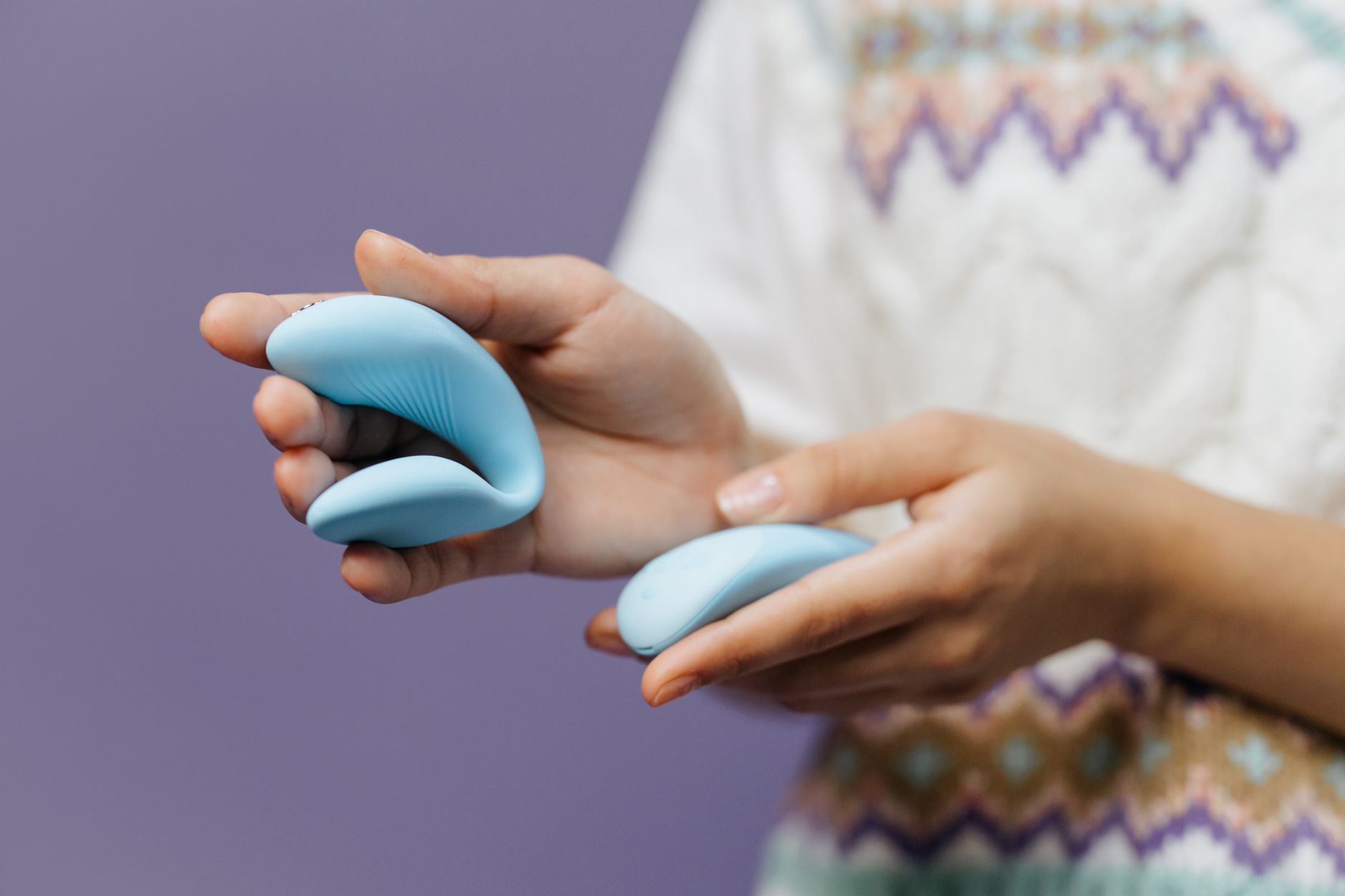
Photo by cottonbro studio on Pexels
Why sensitivity doesn't mean low libido
Here's the thing that got lost somewhere in the conversation about pleasure: sensitive doesn't mean broken. It means responsive. A clitoris that reacts intensely to light touch is actually doing exactly what it's supposed to do.
The problem isn't your body. It's that most pleasure tools were designed for people who need stronger, more direct stimulation to feel anything at all. When you have a sensitive clitoris, a lemon vibrator designed for air-suction feels like someone finally built something with you in mind.
Many people discover that their first truly satisfying orgasm using any device comes after switching to a lemon clitoral vibrator. They'd written themselves off as "not vibrator people" when really they just needed the right technology.
Combining a lemon vibrator with other pleasure approaches
You're not limited to using a lemon vibrator solo. For people with sensitive clitorises, the combination approach often works better:
With a partner during penetration. A lemon sucker provides clitoral stimulation without taking up space or requiring your partner to multitask. They can focus on rhythm and connection while you control the clitoral input.
During partnered oral sex. Some people find that using a lemon vibrator at very low intensity during oral sex amplifies the sensation without overwhelming it. The suction mimics what's already happening, creating a layered effect rather than competing stimulation.
For solo exploration with intention. A lemon clitoral vibrator lets you spend time discovering what your body actually enjoys without the pressure to "perform" arousal. Many sensitive people spend years faking responses, not because they lack desire, but because typical stimulation never felt right.
If you're also navigating how medication affects arousal and sensitivity, a lemon vibrator's gentleness becomes even more valuable. Medications that numb sensation work against you only if you're using devices built for people with less reactive nervous systems.
When sensitivity is actually a sign of something else
Sometimes extreme sensitivity signals something worth exploring with a healthcare provider. If touch causes sharp pain rather than just intensity, or if sensitivity appeared suddenly, it's worth ruling out:
Vulvodynia or other localized pain conditions. These are real, treatable, and often misdiagnosed as "sensitivity issues." A good gynecologist trained in pain can help distinguish between normal reactivity and actual dysfunction.
Hormonal shifts. Sensitivity to touch changes with your cycle, with birth control changes, or during perimenopause. If you've suddenly gone from comfortable with vibration to finding it unbearable, hormones might be the reason. That's worth investigating, not white-knuckling through.
Touch aversion from stress or trauma. Sometimes what feels like clitoral sensitivity is actually nervous system activation. Your clitoris isn't the problem. Your nervous system is in protective mode. That's worth addressing with a therapist, ideally one trained in somatic work.
A lemon vibrator helps with the first scenario. It accommodates the second and third while you're working on the underlying cause. But it's not a substitute for proper diagnosis.
The difference between sensitive and broken
Let me be clear: your sensitive clitoris is not broken. It's not an obstacle to pleasure. It's information about how your body works.
Most of Western culture teaches us that more intensity equals more pleasure, that sensitivity is weakness, and that if you need special tools or careful approach you're somehow deficient. None of that is true. A lemon clitoral vibrator is a tool designed specifically for bodies like yours. Using it isn't settling. It's finally getting the right equipment.
Plenty of people with highly sensitive clitorises report that their most intense, satisfying orgasms come through air-suction devices. Not because they're second-rate. Because they match the way their nervous system actually receives pleasure.
People also ask
Can I use a lemon vibrator if my clitoris is too sensitive to touch at all?
Yes, and that's actually one of the primary uses for air-suction devices like a lemon clitoral vibrator. The technology was designed partly for this reason. You can use a lemon vibrator without direct touching because the silicone opening creates the stimulation. Start at the lowest intensity and lowest pattern. Many people who can't tolerate any touch find that a lemon sucker feels manageable within minutes.
Will a lemon vibrator desensitize my clitoris over time?
Not in the way you're worried about. Your clitoris doesn't "wear out" from stimulation. What can happen is that your nervous system adapts to repeated patterns. This is why it helps to vary your approach, take breaks between sessions, and use different patterns on your lemon vibrator rather than relying on the same one every time. Think of it like cross-training. Variation keeps the response fresh.
Is air-suction stimulation as intense as traditional vibration?
It's different, not necessarily less intense. Many people with sensitive clitorises find it more intense in the way that matters to them. A lemon clitoral vibrator creates a sensation that builds and releases, which some nervous systems find much more satisfying than flat, continuous vibration. You're not compromising pleasure. You're accessing a different kind.
What's the difference between a lemon vibrator and other suction devices?
Differences come down to design, power, and noise. A lemon vibrator (specifically, something like the Lem) is engineered for precise suction with multiple patterns and intensity levels, all quiet enough for most people to use without self-consciousness. Some suction devices are louder or have fewer customization options. If you're choosing between options, quietness and pattern variety matter most for sensitive bodies because you want control and discretion.
Can I use a lemon vibrator if I'm on antidepressants that numb my sensation?
Absolutely. In fact, a lemon vibrator often works better when sensation is muted. If traditional vibrators never worked for you because you couldn't feel them, a lemon clitoral vibrator's rhythm and suction tend to register more clearly. You might still need longer warm-up time and more patience, but the technology itself is well-suited to sensation changes from medication. More details on how to navigate antidepressant effects on sensation.
How do I know if a lemon vibrator is right for me?
You're right for a lemon vibrator if: direct vibration has never felt good, your clitoris becomes uncomfortable after a few minutes of traditional stimulation, you respond better to broad pressure than pinpoint intensity, or you've never found a vibrator that worked and you're willing to try something different. The best way to know is to try one. Most quality lemon clitoral vibrators have good return policies because manufacturers know that fit is personal.
The bottom line
Sensitivity isn't a limitation. It's a characteristic. A lemon vibrator is built for exactly this characteristic. If you've spent years thinking you weren't a vibrator person, you might have simply been using the wrong device.
Your pleasure matters. Your body matters. And a tool that works with your nervous system instead of against it makes all the difference.
Want to explore more about what works for your specific situation? Get in touch and let's talk about what you actually need.
Sources
Osterlund, S. (2021). "Clitoral Anatomy and Physiology: Implications for Sexual Health." Journal of Sexual Medicine, 18(3), 521-535.
Levin, R. J. (2003). "The Physiology of Sexual Arousal in the Human Female." Annals of the New York Academy of Sciences, 1031, 32-46.
Van Lankveld, J., & Granville Garcia, T. (2019). "Individual Differences in Sexual Response: Neurobiology and Sensation." Current Sexual Health Reports, 11(1), 12-24.